Will My Baby Have Green Eyes? Blue + Brown Parents
Explore the genetic probabilities when a blue-eyed parent and a brown-eyed parent mix. Can the baby get rare green eyes? Find out how AI maps these features.
Can a blue-eyed and brown-eyed parent have a green-eyed baby?
Yes, but green is the least likely outcome. When one parent has blue eyes and the other has brown, the child's eye color depends on which alleles each parent carries at the OCA2 and HERC2 genes on chromosome 15 — plus a handful of modifier genes that decide how much melanin ends up in the iris and how it scatters light.
In population studies, this pairing produces roughly 50% brown-eyed, 38% blue-eyed, and only about 12% green or hazel-eyed babies. Green requires a very specific pigment window: enough melanin to darken past pure blue, but not so much that the iris tips into hazel or brown. That narrow window is why green is the rarest eye color in the world — around 2% of the global population.
How the genetics actually work
The classic Punnett square treats eye color as one gene with two alleles, but real biology is polygenic. HERC2 controls a switch upstream of OCA2, and OCA2 determines pigment production. A brown-eyed parent almost always carries at least one dominant "high melanin" allele, and a blue-eyed parent typically carries two recessive "low melanin" alleles.
Their child inherits one allele from each side. When the child receives the brown-eyed parent's recessive variant plus the blue-eyed parent's recessive variant, medium-melanin phenotypes — green, hazel, or amber — become possible. Whether the result reads as green depends on secondary genes like SLC24A4, TYR, and IRF4 that fine-tune pigment distribution.
Punnett square for a brown × blue eye-color pairing
Using the simplified 1-gene model where B is dominant brown and b is recessive blue:
- BB × bb — 100% Bb (all brown-eyed carriers)
- Bb × bb — 50% brown (Bb), 50% blue (bb)
Green outcomes only appear once you layer in the second gene (roughly a green modifier). This is why our Baby Eye Color Calculator outputs a probability, not a yes/no answer.
What if the baby is born with grey or blue eyes?
Nearly every newborn is born with eyes that look grey, dark blue, or slate. Melanin production ramps up gradually after birth, so a baby who ends up with green eyes often starts blue and slowly deepens. Most children reach their final eye color between 6 and 12 months, and a few keep shifting until age 3.
Related eye color questions
- Will my baby have blue eyes if both parents have blue eyes?
- Will my baby have blue eyes if both parents have brown eyes?
- Will my baby have green eyes if both parents have green eyes?
- Will my baby have hazel eyes?
- Green eye inheritance in multi-ethnic families
- Baby eye color genetics explained
Try the calculator
Want an instant probability estimate for your own parent pairing? The Baby Eye Color Calculator covers all 10 combinations of brown, hazel, green, and blue in a single interactive tool. For a visual AI preview of your future baby's face — eye color included — try the BabyMorph AI baby generator.
Punnett square: blue parent + brown parent
Green sits between blue and brown: it needs a low overall pigment level plus green/amber modifier alleles.
| Brown parent: B | Brown parent: b | |
|---|---|---|
| Blue parent: b | Bb — brown or hazel | bb — blue or green |
| Blue parent: b | Bb — brown or hazel | bb — blue or green |
Estimated outcome: if the brown-eyed parent is a carrier, roughly 50% brown or hazel and 50% blue or green — with green itself landing near 15 to 20% overall, since only part of the low-pigment group carries the green modifiers.
What our users say
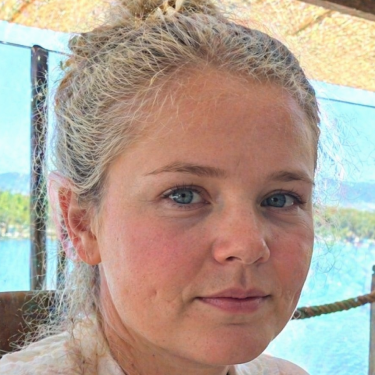
Lena K.
Germany
"We used BabyMorph almost as a joke during my third trimester — something to do on a Sunday afternoon. What came out was a baby girl with very light eyebrows, a wider forehead, and this particular way the nose sits slightly to the left. She was born six weeks later. The eyebrows. The forehead. The nose. Nobody believes it was generated before she arrived."
Their AI baby result
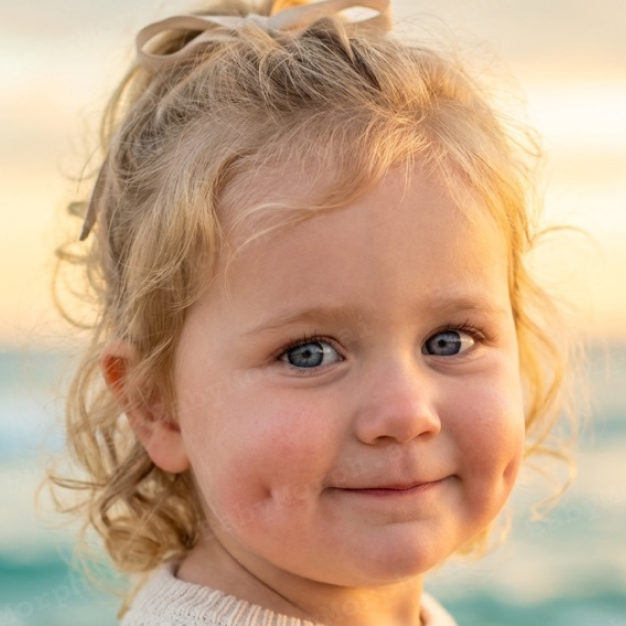

Jason T.
United States
"I have an Asian wife and I've made a habit out of breaking these AI baby tools. Every single one I've tried has completely failed. BabyMorph actually blended her features and mine in a way that made sense — you could see both of us in there without one canceling out the other. People keep asking if it's a real photo."
Their AI baby result
Frequently Asked Questions
Can brown and blue eyes make green?
Yes, but it's the least likely outcome — around 12% in population studies. Green requires a narrow melanin window that only appears when specific modifier genes activate on top of a brown+blue base.
What's the probability of green eyes with one blue and one brown parent?
Roughly 12%. The most likely outcomes are brown (~50%) and blue (~38%). Green is possible but uncommon because it requires a specific pigment level plus modifier genes like SLC24A4.
Why is green eye color so rare?
Green occurs in only about 2% of the world's population because it needs a very specific balance of medium melanin plus light-scattering in the iris stroma. Too little melanin gives blue, too much gives hazel or brown.
Can brown-eyed and blue-eyed parents have a blue-eyed baby?
Yes — about 38% of the time. The blue outcome happens when the child inherits the recessive blue-eye variant from both parents (the brown-eyed parent typically carries one hidden copy).
Does the mother's eye color count more than the father's?
No. Each parent contributes exactly half of the baby's DNA and each allele has an equal chance of being passed on. Neither parent's eye color dominates on principle.
How do genes like HERC2 and OCA2 influence eye color?
OCA2 and HERC2 are the primary genes determining eye color by regulating melanin production in the iris. HERC2 controls a switch that turns OCA2 on or off, with lower activity resulting in less pigment and lighter eyes. Additional genes then fine-tune the final shade, making eye color a complex trait influenced by multiple genetic factors. <em>BabyMorph's AI models these intricate genetic interactions.</em>
When does a baby's final eye color develop?
A baby's final eye color typically develops between 6 and 12 months of age, though some changes can occur up to age 3. Most newborns start with eyes that appear grey, dark blue, or slate because melanin production ramps up gradually after birth. If a baby is destined for green eyes, they will often start blue and slowly deepen in color.
Can a baby have green eyes if neither parent has green eyes?
Yes, a baby can have green eyes even if neither parent does, particularly when one parent has brown eyes and the other has blue. This occurs because both parents can carry recessive alleles for lighter eye colors, and when these combine with specific modifier genes, the medium melanin levels required for green eyes can result. Our <strong>Baby Eye Color Calculator</strong> can provide personalized probabilities for your unique genetic pairing.
What are the odds of green eyes with one blue and one brown-eyed parent?
Roughly 15 to 20% overall. About half the children fall into the low-pigment group that can express green, and within that group only those who also inherit green or amber modifier alleles actually show green rather than blue.
Can a blue and a brown-eyed parent have a blue-eyed baby?
Yes, in about half of cases when the brown-eyed parent carries a low-pigment allele. If that parent carries two brown alleles instead, every child inherits at least one and blue eyes become very unlikely.