Green Eyes From Hazel and Green Parents?
Can a green-eyed and hazel-eyed couple have a green-eyed baby? Learn how iris genes, family traits and childhood changes affect the answer.
A green-eyed parent and a hazel-eyed parent can certainly have a green-eyed child, but there is no single “green-eye gene” that makes the outcome straightforward. Green and hazel eyes both arise from relatively low to moderate amounts of melanin in the iris, shaped by many genetic variants and by the way the iris scatters light. The most realistic answer is that green is a plausible outcome, alongside hazel, blue-grey and various light-to-medium brown shades.
Why green and hazel eyes are genetically related but not identical
Neither green nor hazel is a pigment in its own right. Human irises mainly contain eumelanin, a brown-black pigment. Eye colour depends on how much of that pigment is deposited in the front layers of the iris, where it is distributed, and how light is scattered through the tissue.
Green eyes typically have low to intermediate iris melanin. The green appearance results from light scattering through a lightly pigmented iris, combined with yellowish tones from underlying tissue and small amounts of melanin. Hazel eyes also usually have intermediate pigmentation, but the pigment is often distributed unevenly. A hazel iris may have a brown or amber ring around the pupil, a green outer iris, or different colours that appear stronger in different lighting.
The main genetic contributors
The best-known eye-colour region lies on chromosome 15, where the HERC2 and OCA2 genes influence melanin production in the iris. A regulatory variant in HERC2 can reduce OCA2 activity and is strongly associated with blue eyes in many European populations. However, this well-known association does not neatly distinguish green from hazel. Both colours involve a broader combination of variants affecting pigment amount and distribution.
Other genes associated with normal eye-colour variation include TYR, which is involved in melanin synthesis; TYRP1; SLC24A4; SLC45A2; and IRF4. Variants near these genes can subtly shift an iris towards lighter, darker, greener, greyer, or more amber-toned appearances. This is why two parents with apparently similar hazel-green colouring may have children whose eyes differ noticeably from either parent.
Genes such as MC1R are more influential for red hair and skin pigmentation than for ordinary green eye inheritance, although pigmentation pathways overlap. In rare medical conditions affecting pigmentation, including some forms of albinism involving TYR or OCA2, eye appearance can be affected much more dramatically. Those conditions are separate from the usual family variation discussed here.
What a hazel and green parent pairing can produce
A green-eyed parent may carry variants associated with very low iris pigmentation, while a hazel-eyed parent may carry a mixture associated with both lighter outer iris colour and a more pigmented central ring. Their child inherits a newly shuffled collection of these variants. The result is not an average of the parents’ eye colours: a child can be greener than the green-eyed parent, more uniformly hazel than the hazel-eyed parent, or have blue-grey eyes with a golden central ring.
| Likely child eye appearance | Why it may occur in a green × hazel pairing | Family clues that make it more plausible |
|---|---|---|
| Green | Inherited combination produces low-to-moderate, relatively even iris melanin. | Green, grey, or blue eyes on both sides of the family. |
| Hazel | Intermediate pigment production with uneven central and peripheral distribution. | Hazel, amber, light brown, or green eyes among close relatives. |
| Blue-grey | Child inherits a particularly low-pigment combination, often involving the HERC2–OCA2 region. | Blue or grey-eyed grandparents, siblings, aunts, or uncles. |
| Light or medium brown | Variants promoting greater melanin deposition are inherited from either family line. | Brown eyes are common among grandparents or other close relatives. |
| Amber or green-hazel | Moderate pigment with warm golden tones, often changing in appearance with light. | Relatives described as hazel, golden brown, amber, or “colour-changing”. |
It is tempting to treat green as recessive and brown as dominant, but that school-level model is too limited for real families. It can describe some broad patterns, especially for blue versus brown in certain populations, yet it cannot reliably calculate the chance of green eyes from a hazel and green pairing. A family history provides better context than a single simplified inheritance chart.
How to read the family pattern more usefully
Look beyond the two parents. Full siblings of each parent and all four grandparents can reveal variants that are not obvious from the parents’ visible eye colours. For example, a hazel-eyed parent with two blue-eyed parents may carry a strongly low-pigment genetic background despite having a central brown ring. Conversely, a green-eyed parent with several brown-eyed siblings may carry variants that can support more melanin in a child’s iris.
Features worth noting in family photographs
- Uniformity: Is the hazel parent’s iris consistently mixed, or mostly green with a brown ring close to the pupil?
- Lighting: Hazel and green eyes can look substantially different in shade, sunlight, flash photography, and indoor light.
- Central heterochromia: A golden or brown ring around the pupil is common and does not necessarily mean the overall eye colour is brown.
- Sibling variation: Several different eye colours among siblings indicate that the family carries a broad range of pigmentation variants.
- Ancestry: The frequencies of eye-colour variants differ among populations, although ancestry never determines an individual child’s result on its own.
Photographs should be interpreted cautiously. White balance, coloured clothing, reflected greenery, pupil size, and image editing can all make an eye seem greener or more golden than it is. For an eye-colour assessment, indirect daylight and a clear view of the iris are more informative than a filtered close-up.
When a child’s eye colour becomes visible
Newborn eye colour is an early starting point, not a final answer. Many babies are born with blue-grey, slate-grey, or dark grey eyes because melanin production in the iris is still developing. The amount of pigment can increase after birth as pigment-producing cells respond to developmental signals and light exposure.
| Age | What may be visible | How stable the colour usually is |
|---|---|---|
| Birth to 6 months | Often grey-blue, blue, or dark and undefined; early brown pigment may begin to appear. | Usually unstable. |
| 6 to 12 months | Brown, hazel, green, or grey tendencies become clearer as iris melanin increases. | Changing remains common. |
| 1 to 3 years | The overall colour is commonly apparent; hazel rings and green undertones become easier to recognise. | Often close to the eventual appearance. |
| Age 3 | A useful point for representing a child’s likely established eye-colour family. | Fairly stable, though shade can still mature. |
| Ages 6 and 10 | Colour is generally settled, while iris patterning and the perceived balance of green, gold, and brown may become more distinct. | Usually stable. |
| Age 18 | Adult iris colour and pattern are typically established. | Stable apart from lighting, ageing, or health-related changes. |
For image renderings at ages 3, 6, 10, and 18, it is reasonable to retain the same broad eye-colour category while refining iris detail over time. A predicted green-hazel iris at age 3 might look more softly blended, whereas by adolescence its central amber ring, limbal ring, or radial streaks could appear more defined.
What can and cannot be predicted from parents’ eyes
Parents’ visible eye colours offer meaningful clues, especially when paired with family history, but they do not reveal every relevant genetic variant. Consumer genetic tests can identify some variants associated with blue versus brown differences, yet their ability to separate green, grey, hazel, and amber reliably is still limited. These categories overlap biologically and are assessed differently between observers.
For a hazel and green parent mix, the most defensible expectation is a child within the lighter-to-intermediate pigmentation range, with green and hazel both credible possibilities. Blue-grey remains possible where low-pigment variants are present in the extended family, while brown remains possible if stronger pigment-associated variants are inherited. No responsible prediction should present one of these outcomes as guaranteed.
Frequently asked questions
Is green eye colour dominant over hazel?
No. Green and hazel are not single-gene traits arranged in a simple dominance hierarchy. Both reflect multiple inherited influences on iris melanin amount, placement, and light scattering. A hazel-eyed parent may carry variants associated with low pigmentation, and a green-eyed parent may carry variants associated with somewhat darker outcomes.
Can two parents with green and hazel eyes have a brown-eyed baby?
Yes. Brown eyes are possible if the child inherits enough variants that increase melanin production or deposition in the iris. The likelihood depends greatly on the eye colours and genetic background of grandparents and other close relatives. A brown-eyed child is more plausible where brown eyes occur repeatedly in either family.
At what age will I know whether my baby has green eyes?
Many children show a clear direction by 6 to 12 months, but green versus hazel can remain difficult to classify through the second year. By around age 3, the broad colour is often established. Subtle changes in depth, golden flecks, and the contrast between central and outer iris areas can continue later.
Why do hazel eyes look green on some days?
Hazel eyes have uneven pigment and are particularly sensitive to lighting conditions, clothing colours, pupil size, and the surrounding environment. Bright natural light may emphasise green outer iris tones, while lower light can make the central brown or amber pigment appear more prominent. The iris has not necessarily changed colour.
What our users say
Lena K.
Germany
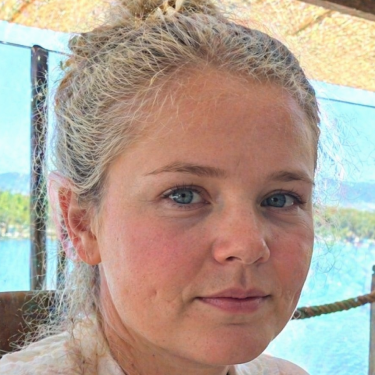
"We used BabyMorph almost as a joke during my third trimester — something to do on a Sunday afternoon. What came out was a baby girl with very light eyebrows, a wider forehead, and this particular way the nose sits slightly to the left. She was born six weeks later. The eyebrows. The forehead. The nose. Nobody believes it was generated before she arrived."
Their AI baby result

Jason T.
United States
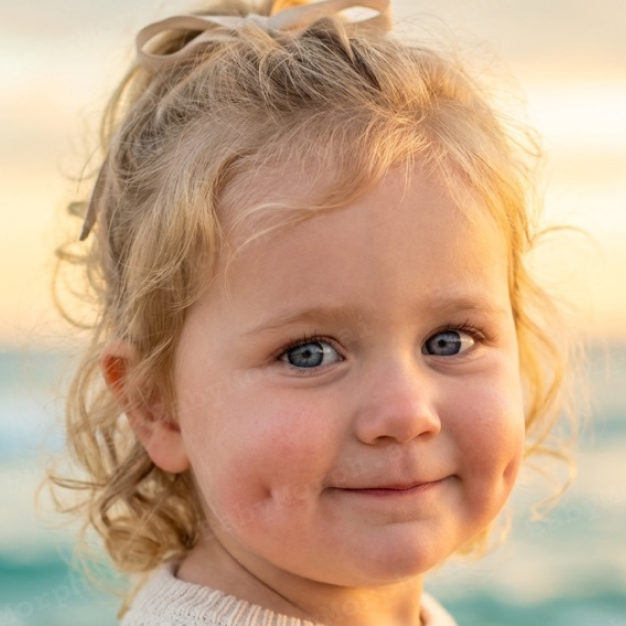
"I have an Asian wife and I've made a habit out of breaking these AI baby tools. Every single one I've tried has completely failed. BabyMorph actually blended her features and mine in a way that made sense — you could see both of us in there without one canceling out the other. People keep asking if it's a real photo."
Their AI baby result
Frequently Asked Questions
Can hazel and green parents have a blue-eyed baby?
Yes. If both the green and hazel parent carry a hidden, recessive blue allele from their family history, the baby can inherit pure blue eyes.
At what age is eye color fully fixed?
While major changes happen in the first year, subtle shade shifts in hazel and green eyes can continue up until the age of 3 or 4.
Is green eye color dominant or recessive?
Green eye color is <em>neither simply dominant nor recessive</em>. Eye color inheritance is complex, involving multiple genes, not just a single gene pair. This complexity means that even with simplified models, predicting green eyes from parents with green and hazel eyes is not straightforward, as various genetic combinations can lead to this outcome.
What genes determine green and hazel eye color?
Green and hazel eye colors are determined by a combination of multiple genes, with the <strong>HERC2 and OCA2 genes</strong> on chromosome 15 being the most well-known. Other genes like TYR, TYRP1, SLC24A4, SLC45A2, and IRF4 also contribute by influencing melanin production and distribution, leading to the specific shades and patterns seen in these eye colors. No single gene dictates green or hazel eyes.
Why do hazel eyes change color with lighting?
Hazel eyes often appear to change color with lighting due to the <strong>uneven distribution of melanin</strong> within the iris and how light scatters through it. Different light conditions can emphasize various underlying pigments and patterns, such as a brown ring around the pupil or a greener outer iris, making the overall perceived color shift. This is a common characteristic of hazel eyes.
Can a child's green eyes be greener than a parent's?
Yes, a child's green eyes <em>can indeed appear greener</em> than either parent's. This happens because the child inherits a unique shuffling of genetic variants from both parents. The combination of these variants might result in an even lower and more uniformly distributed melanin in the iris, leading to a more pronounced green hue than either parent exhibits.
How do I predict my baby's eye color?
Predicting your baby's eye color involves considering the eye colors of both parents, grandparents, and even great-grandparents. Look for patterns like blue or grey eyes in the family history, which can indicate lower pigment variants. While no tool offers 100% certainty, tools like BabyMorph can provide an AI-generated glimpse based on parental photos, reflecting plausible outcomes given known genetic principles.
Do family photos help predict baby eye color?
Yes, family photographs can be very helpful for predicting a baby's eye color, especially when looking at siblings and grandparents. They can reveal hidden genetic variants not obvious from the parents' visible eye colors. Observing uniformity, lighting effects, central heterochromia, and sibling variation in photos provides valuable clues about the range of pigmentation variants present in the family line.