AI Baby Generator

    AI Baby Generator: See What Your Future Baby Will Look Like

    Have you ever wondered which of your features your future child will inherit? Will they have their mother's eyes or their father's chin?

    With our advanced AI Baby Generator, you no longer have to guess. By blending cutting-edge artificial intelligence with established principles of human genetics, our tool analyzes parental photos to predict your future baby's facial features with incredible accuracy.

    See what your future baby will look like!

    Upload two photos and get a realistic baby face in seconds

    1
    Upload parent photos
    2
    Choose gender and age
    3
    Generate your baby

    The Science Behind the Magic: How Genetics Shapes Your Baby's Face

    We don't just randomly generate a baby photo. Our AI algorithm is trained on thousands of familial facial structures and operates based on real genetic data.

    Every child inherits exactly 50% of their DNA from their mother and 50% from their father. However, the way these genes express themselves facially is a complex, beautiful process that science has been studying for decades.

    Who Do Children Look Like More? What the Studies Say

    When designing our AI baby face generator, we relied heavily on peer-reviewed anthropological and genetic research:

    The Age and Gender Shift

    A seminal study published in Evolution and Human Behavior investigated parent–child facial resemblance from birth to age six. The researchers found that while newborns often show a slight initial resemblance to their mothers, a fascinating inversion happens for boys between 2 and 3 years of age, where they begin to significantly resemble their fathers more.

    Heritability of Specific Features

    According to a clinical photographic study tracking heritability between parents and offspring, soft tissue traits are highly predictable. The study found that features like facial height, chin prominence, nasal width, and lip length show statistically significant genetic correlation from parents to their children. Interestingly, the data revealed that daughters tend to inherit a balanced mix of genetic facial influence from both parents, while sons often display a slightly stronger soft-tissue heritability toward their mothers.

    The Variance Factor

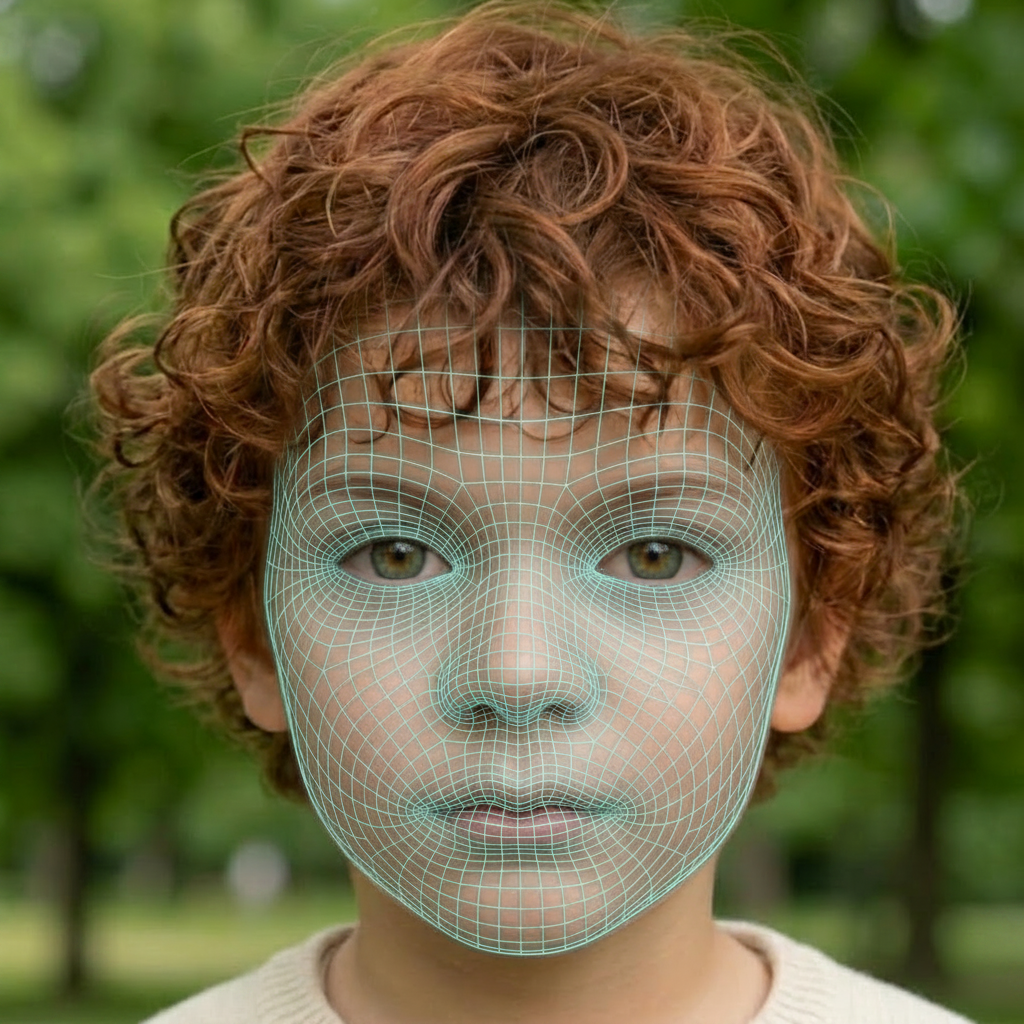
    Further research from the Avon Longitudinal Study of Parents and Children (ALSPAC) indicates that about 46% of total facial variance in children is directly explained by three primary landmarks: face height, width of the eyes, and the prominence of the nose.

    AI baby generator facial landmark mesh overlay on a child's face showing heritability mapping

    How Our AI Future Baby Generator Works

    Our tool replaces traditional guesswork with a sophisticated two-step technological approach:

    1. Step 01

      Facial Landmark Mapping

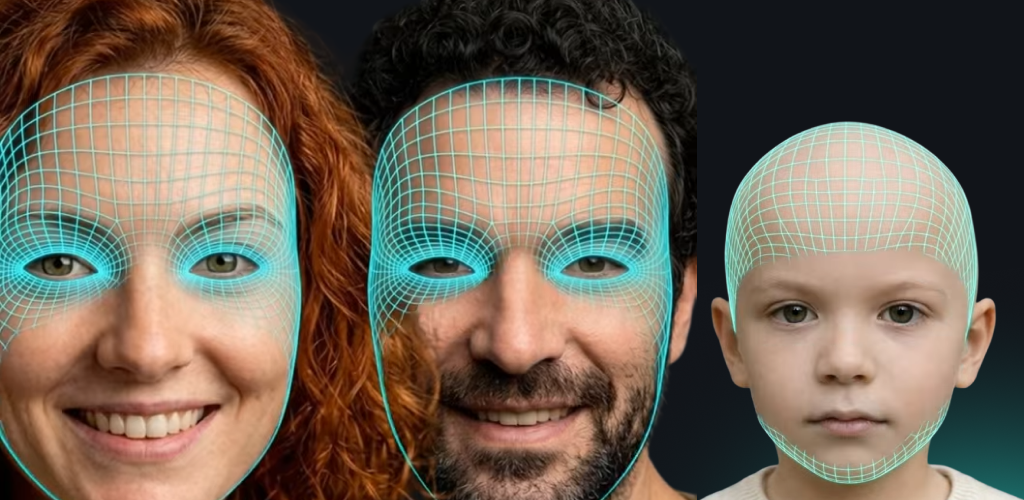
      The AI scans the uploaded photos of the mother and father, identifying over 100 distinct facial landmarks — such as the distance between the eyes, the curve of the jawline, and the structure of the cheekbones.

    2. Step 02

      Genetic Weighting Algorithm

      Based on the heritability patterns validated by genetic science — such as dominant and recessive facial trait probabilities — the algorithm mixes and samples these landmarks to construct a highly realistic, high-definition preview of your future child.

    AI facial landmark mapping comparing mother, father, and predicted child faces

    How to Get the Best Results

    To help our AI accurately analyze your genetic facial structure, please follow these guidelines when uploading your photos:

    • 01

      Clear Lighting

      Ensure both parent photos are well-lit with no heavy shadows.

    • 02

      Front-Facing

      Upload photos where both parents are looking directly at the camera (frontal view).

    • 03

      No Filters or Glasses

      For the most accurate landmark mapping, use natural photos without sunglasses, hats, or heavy beauty filters.

    What our users say

    5.0 · 2
    Lena K.

    Lena K.

    Germany

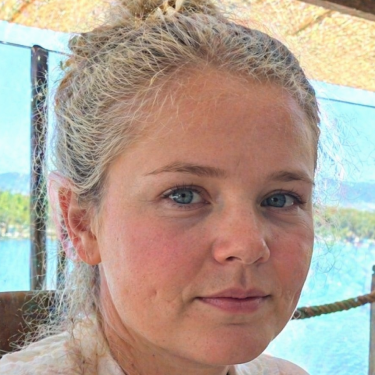
    "We used BabyMorph almost as a joke during my third trimester — something to do on a Sunday afternoon. What came out was a baby girl with very light eyebrows, a wider forehead, and this particular way the nose sits slightly to the left. She was born six weeks later. The eyebrows. The forehead. The nose. Nobody believes it was generated before she arrived."

    Their AI baby result
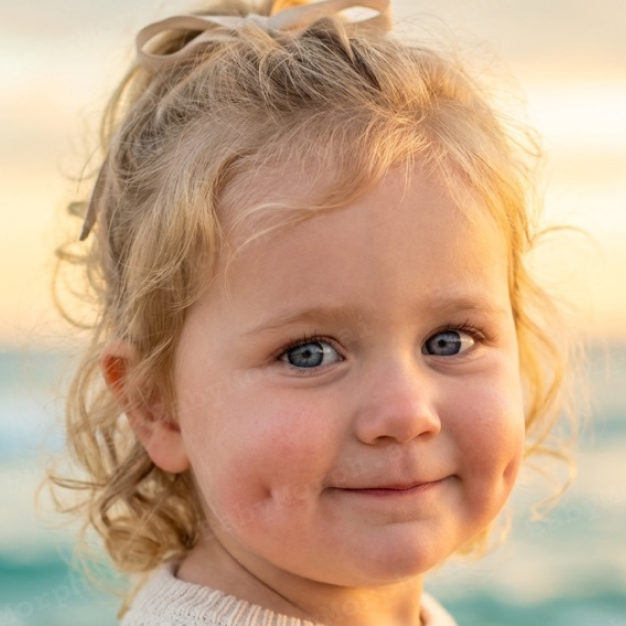
    Lena K.'s AI baby result
    Jason T.

    Jason T.

    United States

    "I have an Asian wife and I've made a habit out of breaking these AI baby tools. Every single one I've tried has completely failed. BabyMorph actually blended her features and mine in a way that made sense — you could see both of us in there without one canceling out the other. People keep asking if it's a real photo."

    Their AI baby result

    Jason T.'s AI baby result

    You may also like

    Family #01

    AI baby generator example — Dad
    Dad
    AI
    AI Prediction
    AI baby generator example — Mom
    Mom

    Family #03

    AI baby generator example — Dad
    Dad
    AI
    AI Prediction
    AI baby generator example — Mom
    Mom

    Family #02

    AI baby generator example — Dad
    Dad
    AI
    AI Prediction
    AI baby generator example — Mom
    Mom

    Ready to see a glimpse of your future?

    Try the AI Baby Generator Now

    See what your future baby will look like!

    Upload two photos and get a realistic baby face in seconds

    1
    Upload parent photos
    2
    Choose gender and age
    3
    Generate your baby

    Frequently Asked Questions

    Q.

    Is an AI baby generator 100% accurate?

    No tool can be 100% accurate, and any that claims to be is overselling. Our AI combines facial landmark mapping of both parents with published heritability data — eye colour, nose shape and jawline are strongly heritable, while hair texture and lip fullness are far more variable. Hundreds of genes interact to build a face, so treat the result as a scientifically grounded preview rather than a photo of your future child.

    Q.

    How does the AI baby generator actually work?

    Three steps run in sequence. First, the system detects and maps facial landmarks on each parent photo — eye spacing, nose bridge width, jaw angle, brow height and dozens more. Second, it weights each trait by how strongly it is inherited, using heritability estimates from large cohort studies such as ALSPAC. Third, a generative model renders a photorealistic child face from that blended landmark profile at the age you selected.

    Q.

    Do I need two parent photos, or can I use one?

    Two photos give a genuine blend and are strongly recommended. With a single photo the model has only one genetic side to work from, so the result skews heavily toward that parent. If you only have one clear photo, the prediction is still generated, but expect the child to resemble that parent more than a real child typically would.

    Q.

    What photos give the most accurate result?

    Front-facing, well-lit photos where the whole face is visible and in focus. Avoid sunglasses, hats, heavy beauty filters, extreme angles and group shots where the face is small. Neutral or lightly smiling expressions map more reliably than wide smiles, because an open mouth distorts the lower-face landmarks the model reads.

    Q.

    Does it work for mixed-race or interracial couples?

    Yes, and this is where most baby generators fail. Weak models collapse toward whichever parent has more common features in their training data. Our pipeline weights both parents' landmark profiles independently and preserves skin tone, eye shape and hair texture from each side, so a mixed-heritage prediction shows both parents rather than one cancelling out the other.

    Q.

    Can it predict my baby's eye colour and hair colour?

    Eye colour is one of the most predictable traits — it is driven largely by the OCA2 and HERC2 genes and follows well-documented probability patterns, which is why our Baby Eye Color Calculator can give odds from the two parents' eye colours. Hair colour and texture are polygenic and far less stable, and hair often darkens over the first few years, so treat hair in the result as a likely outcome, not a fixed one.

    Q.

    Are my uploaded photos safe and private?

    Yes. Photos are used only to map facial landmarks for your generation session. We never store them for training, never share them with third parties and never sell them. Your generated results stay in your account and are visible only to you unless you choose to share them.

    Q.

    Is the AI baby generator free to try?

    Yes — you can start completely free. Upload both parents' photos and our AI runs a full phenotype analysis of each face — eyes, nose, jawline, skin tone and more — at no cost, then generates your baby prediction. Unlocking the finished baby image in full resolution, plus extras like age 18 and 30 versions, family portraits and video animations, uses credits — and every new account starts with a free credit.

    Explore more genetics tools on the BabyMorph blog or try our Baby Eye Color Calculator.

    See Your Future Baby Now!

    Generate My Baby