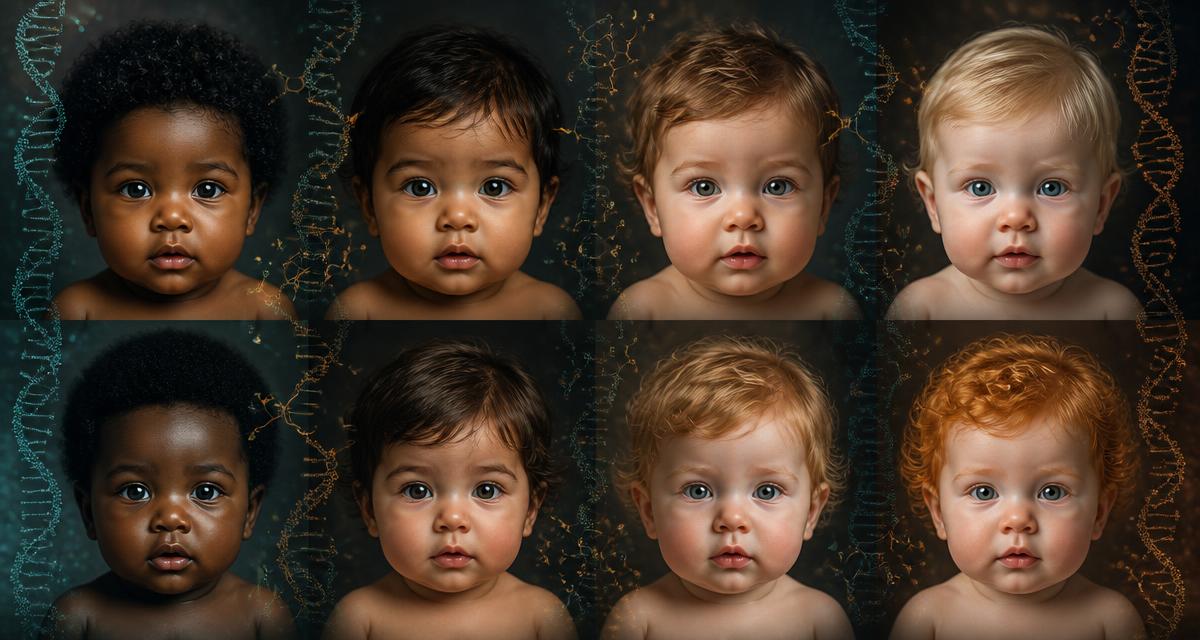
Baby Eye Color Genetics Explained
Blue, brown, green or hazel? A clear guide to how baby eye colour is inherited, why newborn eyes change, and what two parents can realistically expect.
"What colour will the baby's eyes be?" is one of the first questions almost every expecting parent asks. The answer people usually remember from school — brown dominant, blue recessive, done — is a simplification that turns out to be wrong often enough to surprise a lot of families. Here is what actually determines baby eye colour, and what you can reasonably predict from two parents.
Eye colour is pigment, not paint
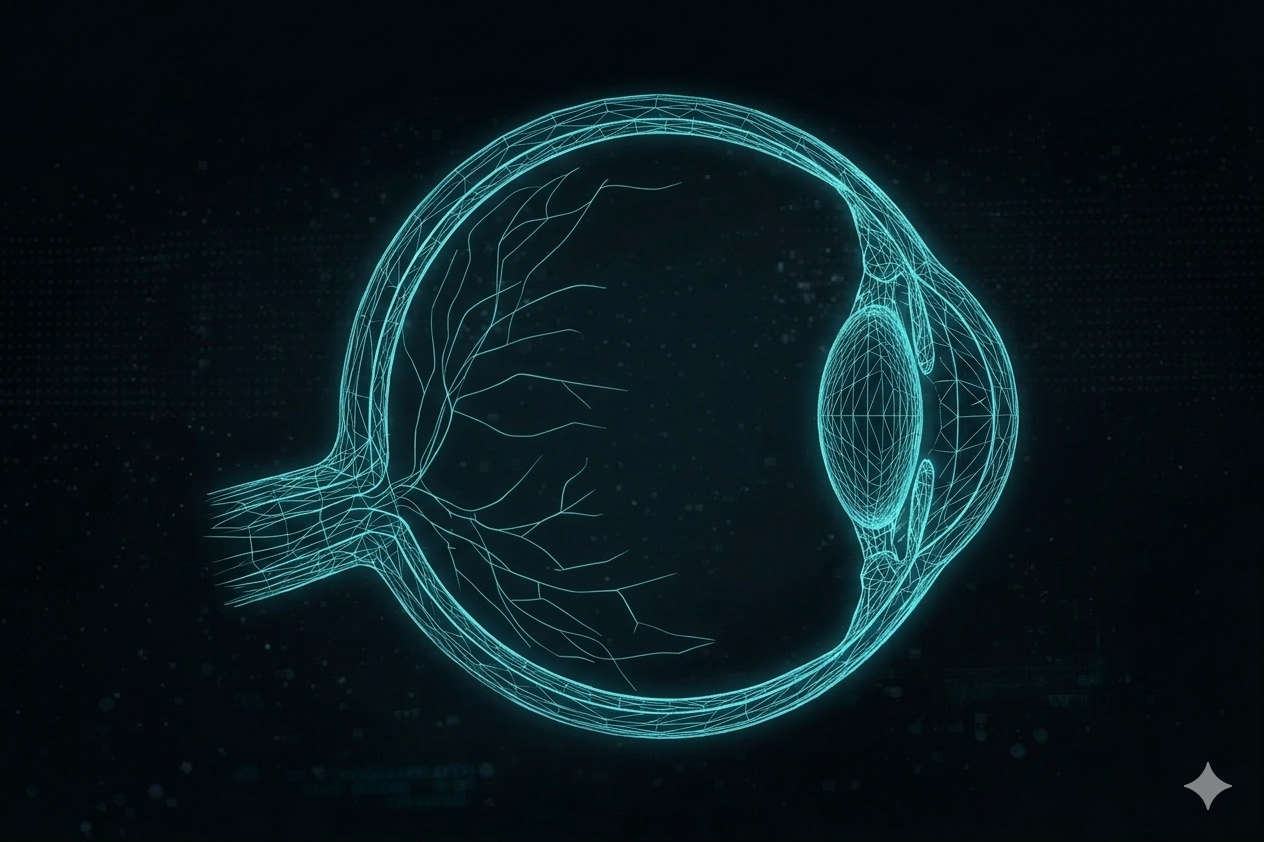
There is no blue pigment in a blue iris. Iris colour is produced by just one pigment — melanin — sitting in the front layer (the stroma) of the iris, combined with how light scatters through the tissue behind it.
- A lot of melanin in the stroma absorbs most incoming light: the iris looks brown.
- Very little melanin lets light scatter back out at short wavelengths: the iris looks blue. This is the same Tyndall scattering that makes the sky blue.
- An intermediate amount, sometimes unevenly distributed, produces green, hazel and amber.
So the whole spectrum from pale blue to near-black is one continuous variable — how much melanin your melanocytes deposit — not a set of separate colours.
The genes involved
Two neighbouring genes on chromosome 15 do most of the work:
- OCA2 encodes the P protein, which regulates melanin production inside melanocytes.
- HERC2 contains a regulatory switch (the rs12913832 variant) that controls how strongly OCA2 is expressed. This single position explains the majority of the blue/brown difference in people of European ancestry.
But at least a dozen further loci — including SLC24A4, TYR, SLC45A2, IRF4 and TYRP1 — nudge the outcome. They are what produce green, hazel, amber, heterochromia and the wide range of browns. This is why eye colour is properly described as polygenic, not a single Mendelian trait.
What two parents can expect
These are population-level tendencies, not guarantees. Any individual child can fall outside them.
| Parents | Most likely outcome | Notable possibility |
|---|---|---|
| Brown + Brown | Brown | Blue or green if both carry light variants — genuinely common |
| Brown + Blue | Brown | Blue is close to a coin flip if the brown parent is heterozygous |
| Blue + Blue | Blue | Green occasionally; brown is rare but documented |
| Green + Blue | Green or blue | Hazel |
| Green + Brown | Brown or hazel | Green |
| Hazel + Hazel | Hazel or brown | Green |
The row that surprises people most is the first one. Two brown-eyed parents who each silently carry a light-eye variant have roughly a one-in-four chance of a blue- or green-eyed child. It is not a fluke; it is basic recessive inheritance.
Why newborn eyes change colour
Melanocytes in the iris are barely active before birth and are switched on partly by light exposure after delivery. That means:
- Many babies of European ancestry are born with slate-blue or grey eyes.
- Babies of African, South Asian, East Asian, Middle Eastern and Latin American ancestry are far more often born with brown or dark grey eyes, because baseline melanin is higher from the start.
- Most of the change happens between 6 and 9 months.
- Colour can continue to deepen subtly until around age three, and a small number of people see further shifts through adolescence.
A practical tip: look at the iris in indirect daylight rather than indoor lighting. Warm artificial light exaggerates amber and hazel tones, and a lot of "my baby's eyes changed overnight" reports are really lighting.
Green eyes: the rarest common colour
Green occurs in roughly 2% of the world's population and depends on a fairly narrow melanin window plus a light-scattering effect. Because it needs an intermediate rather than a maximal or minimal pigment level, it is harder to predict than blue or brown — two green-eyed parents can easily have a hazel or blue child.
Heterochromia and unusual patterns
Two different-coloured irises (complete heterochromia) or a wedge of different colour in one iris (sectoral heterochromia) are usually benign and often inherited. Congenital heterochromia is present at birth. Eye colour that changes suddenly in one eye later in life, or is accompanied by other symptoms, is worth a medical opinion rather than a genetics article.
Can a prediction tool get this right?
Partly. A photo-based predictor sees the phenotype your parents express, not the recessive variants they carry. It can tell you the most probable outcome and it will usually be right on the broad brown-versus-light axis — but it cannot see a hidden blue-eye allele in a brown-eyed parent, and no consumer tool can without an actual DNA test.
This is also why a newborn render is the least reliable one. If you want a prediction that reflects settled pigment, look at an age-3 or older render instead.
Quick answers
Can two blue-eyed parents have a brown-eyed child?
Rarely, but yes — documented cases exist, driven by modifier genes outside HERC2/OCA2.
When is eye colour final?
Usually by 9–12 months, with subtle deepening possible up to age three.
Does eye colour affect vision?
Not acuity. Lighter irises transmit slightly more light, so light-eyed people often report more glare sensitivity.
Do grandparents matter?
Only through what your parents inherited from them — but an unexpected eye colour in a grandparent is a good clue that a recessive variant is running in the family.
Summary
Eye colour is a melanin gradient governed by a handful of major genes and a long tail of modifiers. Brown is the most likely outcome in most pairings, light eyes at birth frequently darken, and two brown-eyed parents can absolutely have a blue-eyed child. Anyone offering a certainty rather than a probability is overselling the biology.
Frequently Asked Questions
How does genetics determine baby eye color?
Baby eye color is determined by the amount of melanin pigment in the iris, controlled primarily by two genes on chromosome 15 (OCA2 and HERC2), and influenced by at least a dozen other genes. This makes eye color a <em>polygenic trait</em>, meaning multiple genes contribute to the final shade, rather than a simple dominant/recessive inheritance pattern often taught. The amount and distribution of melanin dictate the spectrum from blue (very little melanin) to brown (a lot of melanin).
Can two brown-eyed parents have a blue-eyed child?
Yes, two brown-eyed parents can absolutely have a blue-eyed child, and it's not a fluke. This occurs if both parents carry a recessive 'light eye' variant, even if their own eyes are brown. In such cases, there's roughly a one-in-four chance for their child to have blue or green eyes. This highlights the complex, polygenic nature of eye color inheritance beyond simple Mendelian models.
Why do newborn babies' eyes change color?
Newborn babies' eyes often change color because the melanocytes in their irises are not fully active until after birth. Melanin production is stimulated partly by light exposure, causing the color to deepen over time. Many babies of European ancestry are born with slate-blue or grey eyes, which then settle into their permanent shade, usually by 9 to 12 months. Subtle changes can continue until around age three.
When is a baby's eye color final?
A baby's eye color is usually final by 9 to 12 months of age, though subtle deepening can continue until around age three. A small number of individuals may even experience further shifts during adolescence. It's best to observe the iris in indirect daylight, as artificial lighting can exaggerate certain tones and make colors appear different.
Are green eyes the rarest human eye color?
Green eyes are indeed the rarest common eye color, found in approximately 2% of the world's population. Their occurrence depends on a very specific, intermediate amount of melanin combined with a particular light-scattering effect in the iris. This intermediate pigment level makes green eyes harder to predict genetically than blue or brown eyes, as two green-eyed parents can easily have a hazel or blue child.
Can eye color affect vision or eye health?
Eye color does not affect visual acuity itself. However, individuals with lighter irises transmit slightly more light to the retina. This can make light-eyed people more sensitive to glare in bright conditions compared to those with darker eyes. Otherwise, eye color is not generally linked to differences in vision or eye health.
How accurate are AI baby generators for eye color?
AI baby generators like BabyMorph can provide a probable outcome for eye color, especially on the broad brown-versus-light axis, but they cannot offer <strong>guarantees</strong>. A photo-based predictor assesses the visible traits of the parents but cannot detect hidden recessive genes they might carry. For the most reliable prediction, especially with a tool like BabyMorph, it's better to look at an age-3 or older render, as newborn eye color is the least settled.
Do grandparents' eye colors influence a baby's eye color?
Grandparents' eye colors only matter through the genes they passed down to the parents. An unexpected eye color in a grandparent can be a helpful clue that a recessive variant for lighter eyes might be present within the family line. However, the direct genetic contribution comes from the parents' specific gene combination.