Why a Baby's Permanent Eye Color Takes Months to Settle
Why newborn eye colour can change for months: iris pigment, genetics and the age at which a child’s lasting shade becomes clear.
Many newborns appear to have blue, slate-grey or blue-grey eyes, yet this early colour is often not the colour they will have as a child. The iris is still developing after birth: its pigment cells are becoming more active, its connective tissue is maturing, and the way it scatters light is changing. For this reason, eye colour usually settles gradually over months rather than being fully apparent in the delivery room.
The newborn iris is not yet fully pigmented
The coloured part of the eye, the iris, controls how much light enters through the pupil. Its visible colour depends chiefly on melanin, the same broad family of pigments involved in skin and hair colour. However, eye colour is not simply a matter of placing a layer of blue, green or brown pigment in the iris. Blue and many grey eyes contain relatively little melanin in the front layers of the iris; their appearance comes largely from how light is scattered by the iris stroma, a layer of fine collagen-rich tissue.
At birth, melanocytes in the iris may have produced only modest amounts of melanin. This is particularly common in babies with ancestry associated with lighter pigmentation, but it can occur across many populations. A lightly pigmented iris scatters shorter wavelengths of light more strongly, creating a blue or grey appearance. As melanin production increases, the iris can absorb more light and look darker, sometimes moving from blue-grey to green, hazel or brown.
Why blue is usually a structural colour
There is no blue pigment stored in a typical blue iris. Instead, light enters the translucent front portion of the iris and interacts with its collagen fibres and microscopic structure. Shorter blue wavelengths are preferentially scattered back towards the observer, somewhat like the mechanism that makes the daytime sky appear blue. If the iris contains more melanin, less of this scattered light is visible and the eye appears brown.
Green and hazel eyes are intermediate optical outcomes rather than single pigment categories. A modest amount of melanin combined with light scattering can produce green. Hazel eyes often reflect uneven pigment distribution: a golden or brown ring around the pupil may be seen alongside greener or grey-brown outer areas. This pattern can become clearer during infancy and early childhood.
What changes during the first months after birth
Before birth, the eyes develop in a relatively dark environment. Once a baby is born, exposure to light appears to contribute to melanocyte activity in the iris, although genes place the main boundaries on how much pigment those cells can eventually make. The process is gradual, and parents may notice small shifts rather than a dramatic overnight change.
For many babies, the largest visible change occurs between about 3 and 9 months. A blue-grey iris may become deeper blue, green-grey, hazel or light brown. In other children, especially those whose eyes remain blue, the apparent change may be mostly a move from soft newborn grey to a clearer, more saturated blue. Brown eyes can also look increasingly rich as pigment accumulates.
| Age | Typical iris development | What parents may notice |
|---|---|---|
| Birth to 3 months | Low or still-changing melanin production; iris stroma remains immature. | Blue-grey, slate, dark grey or muted brown shades are common. |
| 3 to 6 months | Melanocytes may become more active and pigment patterns begin to emerge. | A gradual darkening, clearer blue, or hints of green, gold or brown. |
| 6 to 12 months | Eye colour is often approaching its childhood shade. | Hazel rings, green tones and brown pigmentation become easier to identify. |
| 1 to 3 years | Fine pigment redistribution and stromal maturation can continue. | Subtle deepening or warming of the colour, particularly in hazel and green eyes. |
| After 3 years | Colour is usually stable, although minor changes remain possible. | The established childhood eye colour is generally evident. |
Genes influence eye colour, but not as a simple chart
Older explanations often described brown as a dominant trait and blue as recessive. That can illustrate some family patterns, but it is not accurate enough for real families. Eye colour is polygenic: many genetic variants influence melanocyte function, melanin production, pigment transport and iris structure.
Two of the best-studied contributors are OCA2 and HERC2, neighbouring genes on chromosome 15. A regulatory variant within HERC2 affects OCA2 activity in the iris. Lower OCA2 expression is strongly associated with blue eyes in many people of European ancestry, while higher activity is associated with increased melanin and brown eyes. Yet these variants do not explain all blue, green, hazel or brown eyes.
Other relevant genes include TYR, which encodes tyrosinase, a key enzyme in melanin synthesis; TYRP1 and SLC45A2, which affect pigmentation pathways; and IRF4, which has associations with lighter eye and hair pigmentation in some populations. MC1R is particularly well known for red hair and fair skin, but can also contribute to broader pigment variation. Genes influencing facial and ocular development, including PAX3, have more specialised developmental roles and should not be treated as straightforward eye-colour predictors.
Why parents’ eye colours are useful but incomplete clues
Two brown-eyed parents can have a blue-eyed child if each carries combinations associated with lower iris melanin. Two blue-eyed parents are more likely to have a blue-eyed child than a brown-eyed child, but rare exceptions and uncertain colour labels make absolute claims unwise. Green and hazel are particularly difficult to forecast from family photographs because they arise from several interacting pigment and structural factors.
- Brown eyes generally indicate greater melanin concentration in the front iris layers.
- Blue eyes usually indicate low melanin and strong light scattering through the stroma.
- Green and hazel eyes often reflect intermediate or uneven pigment distribution.
- Sibling eye colours can differ because each child inherits a different combination of variants.
- Lighting, clothing and pupil size can make the same eyes look noticeably different in photographs.
When eye colour becomes visible in a child’s face
For an age-based facial rendering, eye colour should be treated differently at 3 months than at 3 years. At very young ages, a plausible result may be a broad range of blue-grey, grey-brown or muted tones rather than a highly definite final shade. By age 3, most children’s eye colour is sufficiently established to use as a stable feature, though hazel and green eyes can still gain warmth or depth.
| Rendered age | How settled is eye colour likely to be? | Most realistic interpretation |
|---|---|---|
| 3 years | Usually largely established | Good estimate of childhood colour; minor later shifts remain possible. |
| 6 years | Generally stable | Colour and hazel pattern are normally clear. |
| 10 years | Stable in most children | Eye colour is unlikely to change substantially without a medical cause. |
| 18 years | Stable adult appearance | Subtle differences in photographs are more likely due to light than pigment change. |
Eye colour is only one component of how a face changes. The apparent size and prominence of the eyes also shifts as the nose, brow, cheeks and orbital bones grow. A child may seem to have “different eyes” at age 10 than at age 3 even when iris colour has barely changed, because the surrounding face has matured.
Normal variation and signs worth discussing with a clinician
It is normal for the two eyes to appear slightly different in photographs, particularly under uneven light. Mild differences in iris shade can also be present from infancy. This is called heterochromia when the difference is clear and persistent, and it is often harmless when present from birth.
Parents should seek medical advice promptly if a previously normal eye develops a white pupil reflection, a persistently cloudy cornea, marked redness, pain, sensitivity to light, an abrupt major colour change in one eye, or a new unequal appearance of the pupils. These signs are not explained by ordinary pigment maturation. Routine newborn and childhood eye checks are designed to identify important concerns early.
Frequently asked questions
Can a baby born with blue eyes later develop brown eyes?
Yes. If melanocytes produce increasing amounts of melanin during the first 6 to 12 months, a blue-grey newborn iris can become brown. The shift is often gradual, passing through grey, greenish or hazel-looking stages.
At what age is a baby’s eye colour permanent?
Most children have a fairly reliable eye colour by 9 to 12 months, and it is usually stable by age 3. Green, hazel and lightly brown eyes may continue to show subtle changes in depth until the toddler years.
Do dark-eyed parents always have dark-eyed children?
No. Dark eyes make a darker outcome more likely in many families, but parental eye colour does not reveal all relevant genetic variants. Multiple genes, inherited combinations and the imprecision of labels such as hazel all limit certainty.
Can sunlight change a child’s eye colour?
Ordinary light exposure may be part of the postnatal context in which iris pigment production matures, but sunlight does not reliably turn one genetically determined eye colour into another. Changes seen during infancy chiefly reflect normal developmental pigmentation.
What our users say
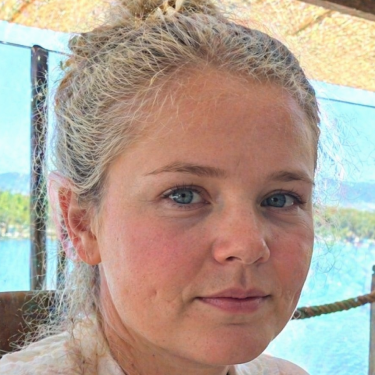
Lena K.
Germany
"We used BabyMorph almost as a joke during my third trimester — something to do on a Sunday afternoon. What came out was a baby girl with very light eyebrows, a wider forehead, and this particular way the nose sits slightly to the left. She was born six weeks later. The eyebrows. The forehead. The nose. Nobody believes it was generated before she arrived."
Their AI baby result
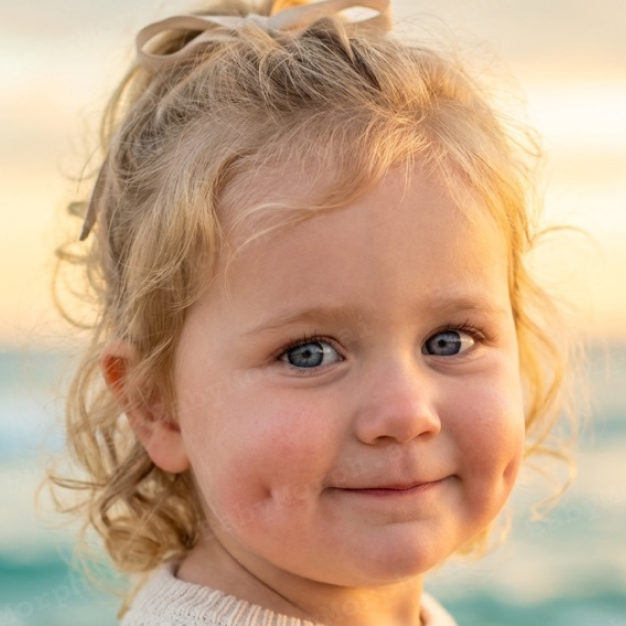

Jason T.
United States
"I have an Asian wife and I've made a habit out of breaking these AI baby tools. Every single one I've tried has completely failed. BabyMorph actually blended her features and mine in a way that made sense — you could see both of us in there without one canceling out the other. People keep asking if it's a real photo."
Their AI baby result
Frequently Asked Questions
When do these specific traits mature fully?
While core structural baselines emerge at birth, overall skeletal proportionality and cartilage mapping continue adjusting actively through childhood.
Why do newborn babies often have blue or grey eyes?
Many newborns appear to have blue, slate-grey, or blue-grey eyes because their irises are not yet fully pigmented. Melanin production is still developing, and the appearance comes largely from how light is scattered by the iris stroma, a layer of fine collagen-rich tissue. As melanin production increases after birth, the eye color can change and darken over several months.
What causes a baby's eye color to change over time?
A baby's eye color changes due to the <em>maturation of the iris</em> and increased melanin production. After birth, exposure to light stimulates melanocytes in the iris to produce more melanin, which can make the eyes appear darker, shifting from blue-grey to green, hazel, or brown. The way light scatters within the iris also evolves, contributing to the final shade.
How long does it take for a baby's eye color to settle permanently?
For many babies, the most significant visible change in eye color occurs between approximately <strong>3 and 9 months</strong>, with the color often approaching its childhood shade by 12 months. However, fine pigment redistribution and stromal maturation can continue up to 3 years. After 3 years, the established childhood eye color is generally evident and stable.
Is blue eye color caused by a blue pigment in the iris?
No, there is <strong>no blue pigment</strong> stored in a typical blue iris. Instead, blue eyes are a structural color, similar to how the sky appears blue. Light enters the translucent front portion of the iris and interacts with its collagen fibers, scattering shorter blue wavelengths back towards the observer. The absence of significant melanin allows this scattering to be prominent. If more melanin is present, less scattered blue light is visible, making the eyes appear brown or green.
Can two brown-eyed parents have a blue-eyed child?
Yes, two brown-eyed parents can have a blue-eyed child. Eye color is polygenic, meaning many genetic variants influence it, not just a simple dominant/recessive pattern. If both parents carry combinations of genes associated with lower iris melanin, even if they have brown eyes themselves, they can pass on the genetic factors that result in blue eyes for their child. You can explore these genetic possibilities with tools like BabyMorph.
What role do genetics play in determining a baby's eye color?
Genetics play a <strong>primary role</strong> in determining a baby's ultimate eye color, although it's not a simple inheritance pattern. Many genes, including OCA2, HERC2, TYR, TYRP1, and SLC45A2, influence melanocyte function, melanin production, and iris structure. These genes set the boundaries for how much pigment cells can eventually make. This complex interplay explains why predicting eye color based solely on parents' eyes can be challenging, but BabyMorph takes into account these genetic nuances to provide a more informed prediction for future children.
When is a baby's eye color considered to be final and stable?
A baby's eye color is generally considered to be <strong>final and stable after 3 years of age</strong>. While the most noticeable changes often occur within the first year, subtle deepening or warming of the color, particularly in hazel and green eyes, can continue up to age three due to fine pigment redistribution and stromal maturation. Once past this age, significant changes are rare.