Decoding Newborn Morphology: Facial Structural Guides
Learn which newborn facial features are temporary, which may persist, and how the eyes, nose, jaw and skull change through age 18.
A newborn’s face is shaped by inherited bone pattern, soft tissue, birth-related swelling and the remarkable mechanics of early growth. Parents often notice a familiar nose, chin or eye area immediately, but a newborn is not a miniature adult. The most useful way to read newborn morphology is to distinguish temporary features from structural clues that are likely to persist as the skull, jaws and facial muscles mature.
What newborn facial morphology can and cannot reveal
Facial morphology describes the form and proportions of the head and face: forehead contour, eye spacing, nasal bridge, cheek width, jaw shape, chin projection and overall facial length. At birth, these features are partly visible, but they are overlaid by soft-tissue effects that can make structural interpretation unreliable in the first days.
For example, a baby born vaginally may have temporary moulding of the skull bones, with a slightly elongated head shape or asymmetry around the forehead. Fluid retention can make the eyelids and cheeks appear fuller, while a compressed nose may look flatter or broader than it will later. These changes usually settle over days to weeks.
The underlying blueprint is influenced by many genes, not a single “face gene”. Genes involved in craniofacial development include PAX3, associated with aspects of nasal bridge and eye-region variation; RUNX2, important in bone formation and cranial development; and EDAR, which contributes to hair, tooth and facial soft-tissue traits in some populations. Their effects interact with hundreds of other genetic variants, developmental timing, sex, ancestry and growth patterns.
The most useful structural features to observe
Head shape and forehead
The skull is designed for rapid brain growth. Its bones are separated by flexible sutures and fontanelles, allowing the head to pass through the birth canal and expand during infancy. A broad forehead, high forehead or gently sloping profile may be family traits, but they should be assessed after early moulding has resolved.
By several months of age, head shape is more representative of the child’s natural cranial pattern. Persistent flattening on one side may relate to positional plagiocephaly rather than inherited facial structure, particularly if a baby consistently sleeps with the head turned in one direction.
Eyes, eyelids and spacing
Eye colour is rarely settled at birth, and apparent eye size is strongly affected by eyelid shape and facial proportions. Newborn eyelids are often puffy. The distance between the inner eye corners may provide a useful family resemblance clue, but it changes visually as the nasal bridge develops and the face lengthens.
The eye region reflects both skeletal anatomy and soft tissue. A low or flat nasal bridge can make the eyes seem more widely spaced during infancy, even when the actual interpupillary distance is within the expected range. Genes near PAX3 have been linked in population studies to variation around the nasal root and eye area, but no single variant can determine a child’s final eye shape.
Nose, midface and cheeks
Newborn noses are short relative to the rest of the face. The bridge is often low and the tip can appear rounded because much of the structure is cartilage, not mature bone. As the midface grows, the nasal bridge tends to become more defined. Family nose shape is often easier to recognise in preschool years than in the newborn period.
Full cheeks are normal in babies and serve a practical role in feeding. They do not necessarily indicate that the adult face will be round. Cheek prominence in later childhood depends more on the cheekbone area, facial fat distribution, jaw growth and body composition.
Jawline, chin and lips
A newborn’s lower jaw is naturally small and set back relative to the upper face. This is a normal developmental arrangement that supports feeding and airway function. The mandible grows substantially through childhood, so a receding-looking newborn chin often becomes less noticeable over time.
Chin shape may nevertheless show family patterns: a central dimple, broad chin pad or more pointed lower-face outline can be visible early. Lip shape is also influenced by inherited anatomy, but sucking blisters, swelling and facial expression can alter its appearance in the first months.
How facial features change from birth to age 18
Facial growth is not evenly distributed. The braincase expands rapidly in infancy, while the nose, jaws and lower face continue developing for many years. This is why a realistic age-based facial rendering should not simply enlarge the same baby face.
| Age | Most noticeable developmental changes | Traits becoming easier to interpret |
|---|---|---|
| Birth to 3 months | Birth swelling settles; skull moulding reduces; feeding-related cheek fullness is prominent. | General head shape, hair pattern and broad family resemblance. |
| Age 3 | Face remains relatively round; nasal bridge begins to show; baby fat is still common. | Eye spacing, eyelid contour, forehead shape and early nose direction. |
| Age 6 | Midface lengthens; deciduous teeth support the cheeks and lips; facial proportions look less infant-like. | Cheekbone pattern, jaw width, lip contour and family nose shape. |
| Age 10 | Steady facial lengthening precedes puberty; permanent teeth and jaw growth affect the lower face. | Nasal bridge, facial width-to-length balance and chin outline. |
| Age 18 | Puberty has substantially altered jaw, nose, brow and facial soft tissue, especially in boys. | Near-adult facial proportions, although subtle maturation can continue into the twenties. |
At age 3, the strongest visible continuity is usually in the upper face: eye area, brow-to-forehead transition and overall facial width. By age 6 and 10, the midface and jaw contribute more strongly. At 18, pubertal hormone exposure becomes an important source of variation. Testosterone tends to increase lower-face breadth, jaw prominence and brow definition on average, whereas oestrogen-associated development often preserves relatively fuller cheeks and a less angular lower face. These are population tendencies, not rules for an individual child.
Genes associated with pigmentation and visible facial framing
Structural traits should be separated from pigmentation, because hair, skin and eye colour may change on a different timetable. In European-ancestry populations, variants in the HERC2/OCA2 region have a major association with blue versus brown eye colour. However, this locus does not account for every shade, and newborn blue-grey eyes may darken as iris melanin increases over the first six to twelve months.
MC1R variants are strongly associated with red hair and lighter pheomelanin-rich pigmentation, particularly in people with north-west European ancestry. TYR is involved in melanin production, while SLC24A5 is one of several loci associated with normal variation in skin pigmentation across populations. These genes help explain colouring; they do not forecast the shape of the nose, jaw or lips.
- Hair texture may change dramatically during the first two to three years, including loss of newborn hair and regrowth with a different curl pattern.
- Eye colour commonly stabilises by around one year, though subtle changes can continue longer.
- Skin tone should be assessed across time and in natural light, not from a newborn photograph affected by jaundice, redness or hospital lighting.
- Freckles, if genetically predisposed, generally emerge after sun exposure during childhood rather than at birth.
Using parent and family resemblance wisely
A child may resemble one parent strongly in one area and the other parent in another. A broad upper face from one side of the family can combine with a narrower chin from the other; a grandparent’s nasal profile may become more apparent only after puberty. Recombination means inherited variants are shuffled in each pregnancy, so siblings can have notably different facial proportions while sharing the same parents.
Photographs of parents at similar ages are more informative than adult comparisons alone. Look for recurring patterns across close relatives: the forehead-to-nose transition, outer eye-corner direction, chin width or smile lines. Avoid treating a single newborn image as decisive. Camera focal length, angle, crying, sleep, swelling and shadows can all distort proportions.
When a facial observation needs medical advice
Most variation in newborn appearance is normal. However, morphology should not be used to self-diagnose a genetic condition from photographs or resemblance charts. Seek advice from a midwife, health visitor, GP or paediatrician if you notice features accompanied by feeding difficulty, breathing concerns, poor growth, marked facial asymmetry, an unusually small or large head circumference, or delayed development.
Prompt assessment is especially appropriate if the lower jaw appears significantly recessed and affects feeding or breathing, if one eye does not open normally, or if head flattening is worsening despite changes in positioning. Clinicians assess the whole child, including growth measurements, family history and physical examination; isolated facial traits are rarely diagnostic.
Frequently asked questions
Can I tell what my baby’s adult nose will look like?
Only in broad outline. A newborn may show the direction, width or family character of the nose, but the bridge, tip projection and length change substantially as the midface grows. Adult-like nasal proportions are usually not evident until adolescence.
Why does my newborn look unlike either parent?
Newborn swelling, skull moulding and immature facial proportions can obscure resemblance. A child also inherits a unique mix of variants from both family lines, so resemblance may emerge later in the eyes, smile, jaw or profile rather than being obvious at birth.
Will my baby’s round face stay round?
Not necessarily. Infant cheek fat and a relatively small jaw create a round appearance in many healthy babies. As the face lengthens, teeth erupt and the jaw grows through childhood, the same child may develop a more oval, heart-shaped or angular facial outline.
When is eye colour most likely to settle?
Many babies show their more stable eye colour between six and twelve months, as melanin develops in the iris. Brown eyes may appear early or deepen gradually; blue-grey eyes may remain light or shift towards green, hazel or brown. Genetics can indicate tendencies, not certainty.
What our users say
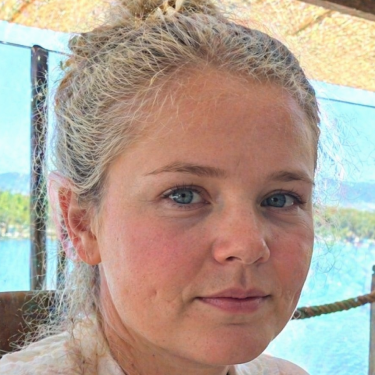
Lena K.
Germany
"We used BabyMorph almost as a joke during my third trimester — something to do on a Sunday afternoon. What came out was a baby girl with very light eyebrows, a wider forehead, and this particular way the nose sits slightly to the left. She was born six weeks later. The eyebrows. The forehead. The nose. Nobody believes it was generated before she arrived."
Their AI baby result


Jason T.
United States
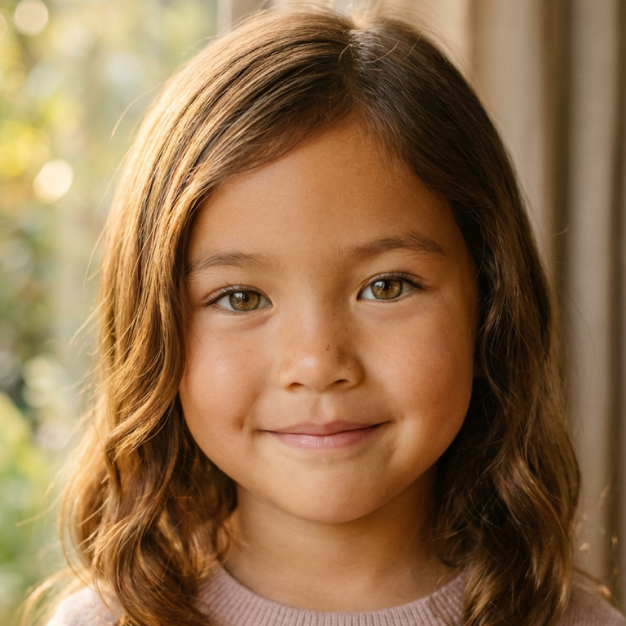
"I have an Asian wife and I've made a habit out of breaking these AI baby tools. Every single one I've tried has completely failed. BabyMorph actually blended her features and mine in a way that made sense — you could see both of us in there without one canceling out the other. People keep asking if it's a real photo."
Their AI baby result
Frequently Asked Questions
When do these specific traits mature fully?
While core structural baselines emerge at birth, overall skeletal proportionality and cartilage mapping continue adjusting actively through childhood.
Which newborn facial features are temporary?
Temporary newborn facial features include skull molding from birth, fluid retention causing puffy eyelids and fuller cheeks, and a compressed nose appearing flatter. These are often due to the birthing process and early fluid balance, and they typically resolve within days to weeks as the baby adjusts to its new environment. <em>A baby born vaginally may have temporary moulding of the skull bones</em>, which usually settles quickly.
Which baby facial features persist into adulthood?
Features more likely to persist include the general head shape after early molding resolves, the distance between the inner eye corners, and specific patterns in chin shape like a dimple or broad pad. While many features evolve significantly, these underlying structural clues can offer an early glimpse into adult appearance. <strong>By several months of age, head shape is more representative of the child’s natural cranial pattern.</strong>
How does a baby's nose change as they grow?
A newborn's nose is typically short with a low bridge and rounded tip, as it's largely cartilage. As the midface grows during childhood, the nasal bridge becomes more defined and the nose lengthens. <em>Family nose shape is often easier to recognise in preschool years than in the newborn period</em>, as the cartilaginous structure matures into more defined bone.
When do babies' eye colors become permanent?
Eye color is rarely settled at birth and can continue to change significantly during the first year or even longer. While a general hue might be visible early, the definitive adult eye color often emerges as the melanin content in the iris develops. Apparent eye size is also strongly affected by eyelid shape and facial proportions, which evolve considerably.
Can BabyMorph predict future nose shape accurately?
BabyMorph provides a predictive visual representation of a child's potential future appearance based on parental features. While it considers genetic influences, a newborn's nose is primarily cartilage and evolves significantly. <em>A more defined family nose shape typically becomes apparent in preschool years</em>, making these predictions an artistic interpretation rather than a medical certainty.
Do babies' full cheeks mean they will have them as adults?
No, full cheeks are normal in babies and play a practical role in feeding, not necessarily indicating adult facial roundness. Cheek prominence in later childhood and adulthood depends more on the underlying cheekbone structure, facial fat distribution, jaw growth, and overall body composition. <strong>Baby fat often diminishes as facial structures mature and lengthen.</strong>
How do genetics influence a baby's facial features?
Facial features are influenced by many genes, not just a single 'face gene.' Genes like PAX3, RUNX2, and EDAR contribute to various aspects of craniofacial development, including nasal bridge, eye-region variation, bone formation, and soft-tissue traits. These effects interact with hundreds of other genetic variants, developmental timing, sex, ancestry, and growth patterns to shape a child's face. While BabyMorph uses these principles, it’s a predictive tool, not a genetic diagnosis.