The Genetic Structural Blueprints of Nordic Jawlines
Explore how craniofacial genes, growth and family variation shape Nordic-associated jawlines from early childhood to adulthood.
Nordic jawlines are often described as broad, angular or cleanly defined, but there is no single “Nordic” facial skeleton and no gene that codes for one. Denmark, Finland, Iceland, Norway and Sweden contain substantial regional and family-level variation. A child’s lower-face shape emerges from many inherited variants, prenatal bone growth, muscle development, dental eruption and the changing proportions of the face from infancy to adulthood.
What people mean by a Nordic jawline
In portraiture and everyday discussion, a Nordic-looking jawline usually refers to a combination of visible features rather than one anatomical trait. These may include a relatively broad mandibular body, a gently square or tapered chin, a visible angle beneath the ear, and moderate forward projection of the chin when seen in profile. Some people also associate the look with a longer lower face or a less prominent cheek-to-jaw transition.
These descriptions are imprecise because a jawline is partly obscured by soft tissue. Body fat distribution, masseter muscle size, skin thickness, posture and lighting can change how defined the mandible appears. Two children may have similarly shaped jawbones but noticeably different jawlines in photographs.
The anatomy beneath the outline
The visible lower face is built around the mandible. Its key landmarks include the mandibular body, which runs from chin to jaw angle; the ramus, the upright section below the ear; the gonial angle, where body and ramus meet; and the chin region, called the symphysis and mental protuberance. Chin projection depends on the size and position of this front part of the mandible, but also on the maxilla, dental bite and nasal profile.
A broad jaw is not necessarily a “stronger” jaw, nor does a square chin indicate a particular ancestry with certainty. These are normal anatomical variations. Population patterns can be visible in large studies, yet they overlap far too widely to identify an individual’s background from jaw shape alone.
Genes that contribute to facial bone structure
Facial form is polygenic: hundreds of genetic locations contribute small effects, while a smaller number influence particular developmental pathways more noticeably. Research using three-dimensional facial scans has linked variants near genes involved in craniofacial development with differences in nose, cheek, forehead and lower-face measurements. These associations help explain biology, but they do not provide a simple recipe for predicting a child’s chin.
Developmental genes with relevant roles
RUNX2 is important in osteoblast differentiation, the process through which bone-forming cells mature. Major changes in RUNX2 can cause cleidocranial dysplasia, demonstrating how strongly this pathway affects skull and facial bone development. Common variants have far subtler effects and are not a standalone explanation for jaw breadth or chin shape.
PAX3 helps guide neural crest cells, embryonic cells that contribute extensively to the face. Variants near PAX3 have been associated in facial-genetics studies with aspects of nasal bridge and upper facial morphology. Because facial regions develop in coordinated networks, genes affecting one area can indirectly alter the apparent balance of the jaw and chin.
EDAR is best known for effects on hair thickness, tooth form and sweat glands, particularly in East Asian and Indigenous American population histories. It is a useful reminder that facial appearance develops alongside other ectodermal and skeletal traits, but it should not be treated as a Nordic jawline gene.
Genes such as OCA2 and HERC2 are relevant mainly to eye and hair pigmentation, while MC1R affects red-hair and skin-pigmentation pathways. TYR and SLC24A5 also contribute to pigmentation. They can influence the visual contrast of a face, making contours seem sharper or softer, but they do not determine mandibular bone architecture.
| Feature seen in a jawline | Main anatomical contributors | How strongly inherited? | What can alter its appearance? |
|---|---|---|---|
| Chin projection | Mandibular symphysis, lower incisor position, maxillary relationship | Moderately heritable, with many contributing variants | Growth pattern, bite development, orthodontic treatment |
| Jaw width | Mandibular body breadth, ramus flare, muscle and soft tissue | Substantially familial but not predictable from one parent | Masseter development, body composition, camera angle |
| Jaw angle definition | Gonial angle, ramus height, tissue overlying the angle | Polygenic and developmentally variable | Puberty, muscle use, facial fat distribution |
| Overall lower-face length | Mandibular growth, tooth eruption, vertical facial growth | Familial tendency with environmental input | Growth timing, bite, endocrine and nutritional factors |
How inheritance works within Nordic families
Children do not inherit a parent’s jawline as a single intact feature. They inherit a reshuffled set of DNA variants from both sides of the family. A child may receive variants associated with a wider mandibular body from one parent, a more projecting chin from the other, and growth-related traits resembling a grandparent. The resulting profile can therefore look familiar without matching any close relative exactly.
Family resemblance is particularly informative when several relatives share a feature across generations. If a prominent chin appears in a parent, grandparent and siblings, a child has a higher-than-average chance of developing a related feature. That is still not a guarantee: the expression of the trait may be milder, stronger, or balanced differently by the upper jaw and cheekbones.
Why parental photographs need careful interpretation
- Adult jaw definition includes decades of skeletal growth and soft-tissue change.
- Men often experience more late-adolescent mandibular growth than women on average, although individual variation is wide.
- Dental crowding, overbite, underbite and orthodontic treatment can alter the visual relationship between chin and lips.
- Facial photographs distort proportions depending on lens focal length, head rotation and expression.
- Ethnic labels describe broad histories, not fixed facial templates for a particular child.
For a realistic family-based estimate, it is more useful to compare front and profile photographs taken at similar ages than to rely on nationality alone. A parent’s childhood photographs may reveal growth patterns that adult images cannot.
When jawline traits become visible
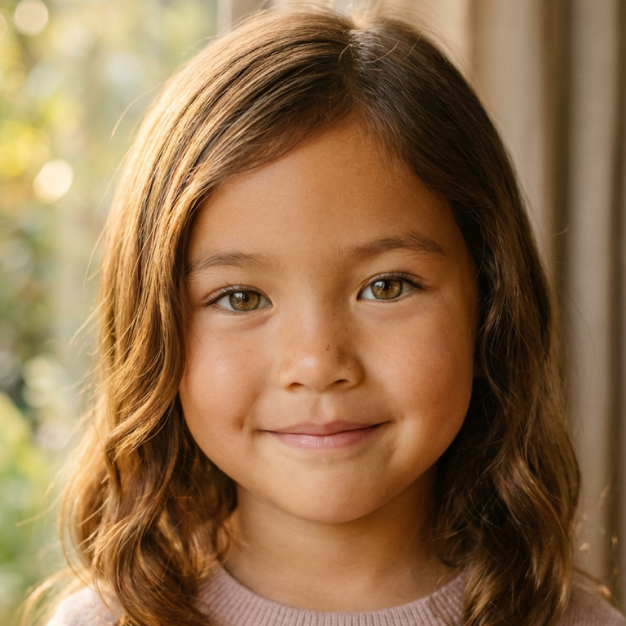
The lower face changes continuously. A rendered image at age three, six, ten or eighteen should be interpreted as an age-specific possibility, not a promise that the adult facial outline will remain unchanged.
| Age | Typical jawline appearance | What is still changing |
|---|---|---|
| 3 years | Small mandible, rounded cheeks and a subtle chin contour | Deciduous dentition, facial fat and rapid early growth |
| 6 years | Lower-face outline becomes easier to see as the face lengthens | First permanent teeth and changing jaw-to-cheek proportions |
| 10 years | Family resemblance in chin width and facial proportions is often clearer | Pre-pubertal growth and eruption of permanent teeth |
| 18 years | More mature jaw angle and chin projection, especially after puberty | Late mandibular growth may continue into the early twenties |
At age three, cheek fullness commonly hides a broad or angular bone structure. By age six, the transition from round infant facial proportions begins to reveal lower-face width. At around ten, chin shape and jaw-body proportions are often more recognisable, though puberty can substantially change the profile. During adolescence, growth at the mandibular condyles lengthens and repositions the jaw. On average, this growth spurt occurs earlier in girls and later, often more prolonged, in boys.
Genes are not the only influence on jaw development
Genetics establishes developmental potential, but the final outline is influenced by growth conditions. Normal nutrition supports bone and dental development. Chronic mouth breathing, enlarged adenoids, sleep-disordered breathing and persistent oral habits can be associated with altered facial growth patterns in some children, although they are not simple causes of any one jaw shape.
The relationship of the upper and lower jaws also matters. An overjet, crossbite or underbite can make the chin appear more retrusive or prominent than the underlying chin bone alone would suggest. Regular dental reviews are useful as permanent teeth emerge. If a child has difficulty chewing, persistent snoring, mouth breathing, speech concerns or a noticeably asymmetrical bite, a dentist, orthodontist or paediatric clinician can assess the issue directly.
Frequently asked questions
Can a child inherit a Nordic-looking square jaw from one parent?
They may inherit variants and growth tendencies that contribute to a broader or squarer lower face, but the outcome reflects both parental lineages and developmental factors. A visibly square adult jaw is not inherited as one dominant trait.
Does a prominent chin mean a child will have the same jawline as a parent?
No. Chin prominence can resemble one parent while jaw width, angle and facial length resemble the other. The upper jaw, teeth and soft tissue also affect how prominent the chin appears in profile.
At what age can chin shape be predicted reliably?
Broad family resemblance may be visible in childhood, particularly by about age ten, but adult chin projection and jaw definition remain uncertain until after puberty. Late adolescent growth can change the lower-face profile appreciably.
Are pale colouring and a defined jaw genetically connected?
Not in a direct, general sense. Pigmentation genes such as OCA2, HERC2, MC1R, TYR and SLC24A5 affect colouring, whereas jaw structure arises through separate, highly polygenic craniofacial growth pathways. Contrast from skin and hair colour may simply make contours look more noticeable.
What our users say
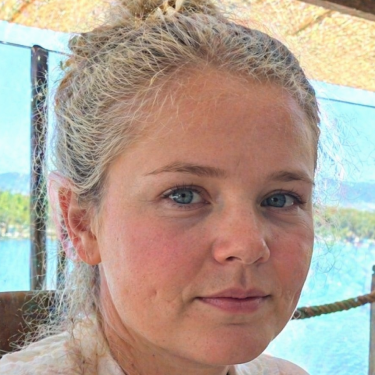
Lena K.
Germany
"We used BabyMorph almost as a joke during my third trimester — something to do on a Sunday afternoon. What came out was a baby girl with very light eyebrows, a wider forehead, and this particular way the nose sits slightly to the left. She was born six weeks later. The eyebrows. The forehead. The nose. Nobody believes it was generated before she arrived."
Their AI baby result


Jason T.
United States
"I have an Asian wife and I've made a habit out of breaking these AI baby tools. Every single one I've tried has completely failed. BabyMorph actually blended her features and mine in a way that made sense — you could see both of us in there without one canceling out the other. People keep asking if it's a real photo."
Their AI baby result
Frequently Asked Questions
When do these specific traits mature fully?
While core structural baselines emerge at birth, overall skeletal proportionality and cartilage mapping continue adjusting actively through childhood.
What defines a Nordic jawline's appearance and structure?
A Nordic-looking jawline typically refers to a combination of visible features such as a <em>broad mandibular body</em>, a gently square or tapered chin, a visible angle below the ear, and moderate forward chin projection. These characteristics are influenced by the underlying bone structure, including the mandibular body, ramus, and gonial angle, as well as soft tissues like muscle and fat distribution. The perception of these features can also be altered by lighting and facial expressions.
How do genes influence facial bone structure development?
Facial form is polygenic, meaning <em>hundreds of genetic locations contribute small effects</em>, with some influencing specific developmental pathways more noticeably. Genes like RUNX2 are crucial for bone formation, while PAX3 helps guide embryonic cells that extensively contribute to the face. These genetic associations help explain the biological basis of facial differences, though they do not provide a simple recipe for predicting a child's exact chin or jawline shape.
Can genetics predict a child's jawline from parents?
Children inherit a reshuffled set of DNA variants from both parents, not an intact copy of a parent's jawline. This means a child may inherit different traits from each parent or even resemble a grandparent. <em>Family resemblance is informative when several relatives share a feature</em> across generations, suggesting a higher chance, but it's never a guarantee that a child's jawline will exactly match a relative due to the complex interplay of many genes. This is why BabyMorph can only predict potential features.
What is the role of the mandible in jawline definition?
The mandible, or lower jawbone, is the central anatomical structure defining the visible lower face. Key landmarks include the mandibular body, running from chin to jaw angle; the ramus, the upright section beneath the ear; and the gonial angle, where these sections meet. The <em>chin's projection is dependent on the size and position of the mandible's front part</em>, but also influenced by the maxilla, dental bite, and nasal profile, creating a complex interaction.
Are specific genes responsible for a 'Nordic jawline'?
There is no single gene that codes for a 'Nordic jawline,' as it is a complex, polygenic trait. While genes like RUNX2 and PAX3 are involved in craniofacial development, and EDAR relates to ectodermal traits, <em>no single gene is solely responsible for this appearance</em>. Genes like OCA2, HERC2, MC1R, TYR, and SLC24A5 mainly influence pigmentation, which can affect perceived facial contours but not the underlying bone structure. The concept of a 'Nordic jawline' is more about a combination of visible features than a direct genetic blueprint.
How does environmental factors impact jawline appearance?
Environmental factors significantly influence jawline appearance, even with similar underlying bone structures. <em>Body fat distribution, masseter muscle size, skin thickness, posture, and lighting can alter how defined the mandible appears</em>. Developmental factors such as growth patterns, dental bite, and orthodontic treatment also play a crucial role in shaping chin projection and overall lower-face length. These elements explain why two children with similarly shaped jawbones might present noticeably different jawlines in photographs. For BabyMorph predictions, these environmental factors are not considered.
Can a broad jaw indicate specific ancestry?
No, a broad jaw does not necessarily indicate a particular ancestry with certainty. While population patterns in facial features can be observed in large studies, <em>these variations overlap far too widely to identify an individual's background from jaw shape alone</em>. Broad jaws and square chins are considered normal anatomical variations found across diverse populations. Genetic ancestry is determined by a much broader range of genetic markers than those influencing a single physical trait.