Will My Mixed-Race Child Have Freckles? The MC1R Gene
How MC1R and other pigment genes influence freckles in mixed-race children, with realistic age timelines and sun-safety guidance.
Freckles are small, flat areas of increased melanin that become more noticeable after ultraviolet exposure. They are often associated with fair skin and red hair, but a mixed-race child can have freckles across a wide range of skin tones. The key question is not simply whether one parent has freckles: it is how the child’s inherited pigment genes interact with their baseline skin colour, sun exposure, and skin’s individual response to UV light.
What freckles are, and why they appear
The common childhood freckle is called an ephelis (plural: ephelides). These are usually light tan, golden brown, or darker brown spots, most often found on sun-exposed areas: the nose, cheeks, forehead, shoulders, upper chest and arms. Unlike moles, freckles do not usually involve a larger number of pigment-producing cells. Instead, melanocytes in particular small areas produce and distribute more melanin after sunlight exposure.
Freckles tend to deepen in spring and summer and fade during periods of low UV exposure. This seasonal change is one useful clue that a spot is likely to be a freckle rather than a mole or a lentigo.
Freckles are not the same as uneven pigmentation
Children with medium, olive, brown or deep skin tones may develop several forms of pigmentation that can be mistaken for freckles. Post-inflammatory hyperpigmentation, for example, can leave dark marks after eczema, insect bites, acne or minor injuries. Lentigines are more persistent, sharply defined pigmented spots and do not fade as readily in winter. A clinician should assess any spot that changes rapidly, bleeds, becomes raised, has irregular colouring, or looks notably different from the child’s other marks.
The MC1R gene and freckling tendency
MC1R, short for melanocortin 1 receptor, is the best-known gene linked with red hair, sun sensitivity and freckles. It provides instructions for a receptor on melanocytes. When this receptor works strongly, pigment cells tend to make more eumelanin, the brown-black pigment that offers relatively greater UV protection. Certain MC1R variants reduce this signalling and shift pigment production towards pheomelanin, a red-yellow pigment.
Some MC1R variants are strongly associated with red hair and very fair, freckle-prone skin in people of northern European ancestry. Common examples include variants often described in research as R151C, R160W and D294H. However, carrying an MC1R variant does not guarantee red hair or visible freckles. A child may inherit one variant associated with freckling but have enough eumelanin-producing influences elsewhere in their genome that their hair remains brown or black and their freckles are subtle.
In a child with ancestry from more than one population, MC1R still matters, but it is only one part of the picture. A variant associated with fair skin may be inherited alongside variants contributing to higher baseline melanin production. The visible result might be a child with medium-brown skin who tans reasonably well but develops a scattering of darker facial freckles after repeated sun exposure. Alternatively, freckles may be genetically present as a tendency but difficult to see against a deeper baseline skin tone.
Other genes affect the final appearance
Freckling is a polygenic trait: many genetic locations contribute small or moderate effects. Research has linked freckle count and pigment patterning to genes including ASIP, IRF4, BNC2, TYR and OCA2. These genes influence melanocyte activity, melanin synthesis, pigment transfer, and the contrast between a spot and surrounding skin.
OCA2 and the nearby HERC2 region are especially familiar in discussions of eye colour, but they also influence pigmentation more broadly. TYR encodes tyrosinase, an enzyme central to melanin production. ASIP can modify MC1R signalling, while IRF4 has been associated with freckling and lighter pigmentation in several genome-wide studies. The effects are not identical in all ancestry groups because gene variants, background pigmentation and studied populations differ.
| Factor | What it can influence | What it cannot tell you alone |
|---|---|---|
| MC1R variants | Likelihood of red-yellow pigment, UV sensitivity and visible freckling | Whether a child will definitely have red hair or many freckles |
| ASIP, IRF4 and BNC2 | Freckle number, pigment distribution and contrast on the skin | The precise location of individual freckles |
| OCA2, HERC2, TYR and other pigment genes | Baseline skin, eye and hair pigmentation | A simple “light parent plus dark parent” outcome |
| UV exposure | How strongly a genetic freckling tendency becomes visible | Whether the child inherited that tendency |
How parental traits change the odds
A parent’s visible freckles are useful evidence, but not a complete genetic test. A heavily freckled parent may carry several variants that promote visible ephelides, and this increases the chance that their child inherits some of those variants. Yet the other parent’s pigment genetics can substantially alter how those inherited variants appear.
For example, a child may inherit an MC1R variant from a fair, freckled parent and pigment-associated variants linked to darker skin from the other parent. That child may have few visible freckles, may freckle only on the nose and shoulders, or may have freckles that appear as slightly darker spots rather than the classic light-brown dots commonly shown in photographs of fair-skinned children.
- Two freckled parents increase the likelihood of a noticeable freckling tendency, especially if both freckle in childhood.
- One freckled parent can pass on freckle-associated variants, but the child’s visible pattern remains uncertain.
- Two parents without obvious freckles can still have a freckled child, particularly if freckles were hidden by limited sun exposure, darker baseline pigmentation, or were more apparent in grandparents.
- Red hair in a parent or close relative makes certain MC1R variants more plausible, but does not by itself predict the child’s hair or freckle pattern.
It is therefore more accurate to talk about an increased or reduced likelihood than to assign a percentage from family appearance alone. Most consumer DNA tests also cannot provide a dependable forecast of freckle number, density or placement.
When freckles become visible from childhood to adulthood
Freckles are unusual at birth. Newborn skin is still adapting to life outside the womb, and meaningful cumulative sun exposure has not occurred. Even children who later become distinctly freckled commonly have smooth, even-looking skin in infancy.
| Age | Typical freckle visibility | What may be changing |
|---|---|---|
| Birth to 2 years | Usually absent or very faint | Little accumulated UV exposure; baseline skin tone is still settling |
| Age 3 | A few nose or cheek freckles may begin in predisposed children | Outdoor exposure starts revealing local pigment response |
| Age 6 | Often the clearest early pattern | Repeated summers can increase number and contrast |
| Age 10 | Freckles may be widespread on the face, arms and shoulders | Childhood cumulative UV exposure and maturing pigment regulation |
| Age 18 | Pattern may deepen, stabilise, or become less conspicuous | Puberty, lifestyle, sun protection and tanning response influence appearance |
For age-based facial visualisation, age 3 should be treated as an early possibility rather than a final freckle pattern. By age 6 and particularly age 10, inherited freckling tendency is more likely to be visible if the child has received ordinary outdoor exposure. At age 18, the pattern can still vary considerably with habits and climate; genetics cannot determine the exact effects of future sunlight.
Skin tone, ancestry and sun safety
Freckles can occur in children of African, East Asian, South Asian, Middle Eastern, Indigenous American, European and mixed heritage. Their colour may range from pale caramel to deep brown, and contrast is often lower on richly pigmented skin. This means that “no visible freckles” does not necessarily mean “no genetic tendency to freckle”.
It is important not to seek sun exposure to find out whether a child will freckle. Freckles are evidence that UV radiation has activated pigment production, not a sign that skin has become immune to damage. Children need shade, protective clothing, hats and suitable broad-spectrum sunscreen as part of normal sun safety. Deeper skin tones have more natural melanin protection on average, but they can still burn and experience UV-related damage.
Frequently asked questions
Will my child have freckles if I have them but my partner does not?
They may, but it is not certain. Your freckles suggest that you may carry variants associated with freckling, including possible MC1R-related variants. Your child’s other inherited pigment genes, baseline skin tone and UV exposure will determine whether freckles become visibly distinct.
Can a child have freckles without red hair?
Yes. Freckles are common in people with blonde, brown, auburn and black hair. Some MC1R variants raise freckling likelihood without producing red hair, and genes such as IRF4, ASIP and BNC2 can also contribute to the trait.
Do freckles fade as a child gets older?
They often fade in winter and darken after sunny periods. Some childhood freckles become less noticeable in adulthood, while others persist. Sun protection can reduce new UV-induced darkening, although it cannot change the inherited tendency behind freckling.
Are freckles inherited in a simple dominant or recessive way?
No. Although MC1R is important, freckling does not follow one straightforward dominant or recessive pattern. It reflects the combined effect of many pigment genes and environmental exposure, so family resemblance can be informative without being definitive.
What our users say
Lena K.
Germany
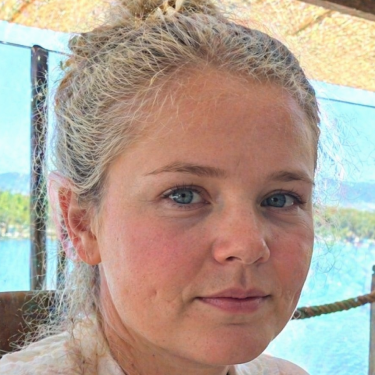
"We used BabyMorph almost as a joke during my third trimester — something to do on a Sunday afternoon. What came out was a baby girl with very light eyebrows, a wider forehead, and this particular way the nose sits slightly to the left. She was born six weeks later. The eyebrows. The forehead. The nose. Nobody believes it was generated before she arrived."
Their AI baby result

Jason T.
United States
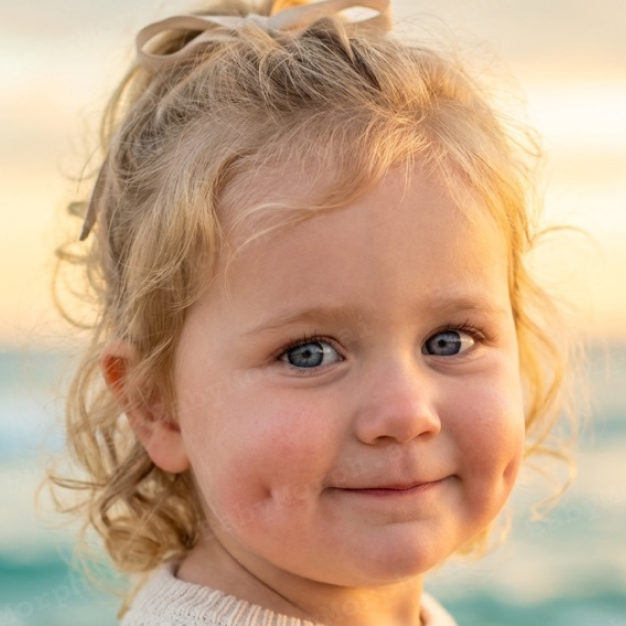
"I have an Asian wife and I've made a habit out of breaking these AI baby tools. Every single one I've tried has completely failed. BabyMorph actually blended her features and mine in a way that made sense — you could see both of us in there without one canceling out the other. People keep asking if it's a real photo."
Their AI baby result
Frequently Asked Questions
When do these specific traits mature fully?
While core structural baselines emerge at birth, overall skeletal proportionality and cartilage mapping continue adjusting actively through childhood.
What makes mixed-race children likely to have freckles?
Mixed-race children can develop freckles due to the interaction of inherited pigment genes, baseline skin color, and sun exposure. Even if one parent has darker skin, variants like those in the <em>MC1R</em> gene from the other parent can still influence freckling. Freckles are areas where melanocytes produce more melanin after UV exposure, and this can occur across a wide range of skin tones, not just very fair skin.
How does the MC1R gene influence freckle development?
The <em>MC1R</em> gene provides instructions for a receptor on melanocytes, influencing the type of melanin produced. Variants of <em>MC1R</em> can shift pigment production towards pheomelanin (red-yellow pigment), which is associated with sun sensitivity and freckles. While strongly linked to red hair and fair skin in some populations, a child with <em>MC1R</em> variants might have subtle freckles or freckle only after significant sun exposure, especially if they have other genes contributing to higher baseline melanin production.
Can a child have freckles if neither parent has them?
Yes, a child can have freckles even if neither parent exhibits them prominently. Freckle-associated genes might be present but unexpressed in parents due to limited sun exposure, darker baseline pigmentation, or if freckles were more apparent in their grandparents. Genetic tendencies for freckling can be inherited and only become visible under specific environmental conditions, like increased UV exposure.
Are freckles different from other skin spots on children?
Yes, freckles (ephelides) are distinct from other skin spots. They are small, flat areas of increased melanin that typically deepen with sun exposure and fade during winter. In contrast, post-inflammatory hyperpigmentation results from skin injury, and lentigines are more persistent, sharply defined pigmented spots that do not fade seasonally. Any rapidly changing, bleeding, raised, or irregularly colored spot should be assessed by a clinician.
What other genes contribute to a child's freckles?
Freckling is a polygenic trait, meaning many genes contribute. Beyond <em>MC1R</em>, genes like <em>ASIP</em>, <em>IRF4</em>, <em>BNC2</em>, <em>TYR</em>, and <em>OCA2</em> also influence freckle count and pigment patterns. These genes affect melanocyte activity, melanin synthesis, pigment transfer, and the contrast between freckles and surrounding skin. Their effects can vary depending on an individual's ancestry and overall genetic makeup. For example, <em>TYR</em> encodes an enzyme crucial for melanin production.
How can BabyMorph predict my child's freckles?
BabyMorph utilizes advanced AI to analyze genetic markers and phenotypic traits from parent photos, including those related to freckling. While we don't provide genetic testing, our predictions consider the likelihood of inheriting gene variants like <em>MC1R</em> and others known to influence freckle development. We aim to offer a realistic glimpse into potential traits by modeling how these complex genetic interactions might manifest in your future child, including variations in skin tone and pigmentation.
What sun safety is best for freckle-prone children?
Sun safety is crucial for freckle-prone children to protect their skin from harmful UV radiation. This includes seeking shade, especially during peak sun hours (10 AM to 4 PM), wearing protective clothing like long sleeves and wide-brimmed hats, and regularly applying a broad-spectrum sunscreen with an SPF of 30 or higher. Regular sun protection helps prevent sunburn and minimizes the risk of skin damage, even if freckles are genetically predisposed to appear.