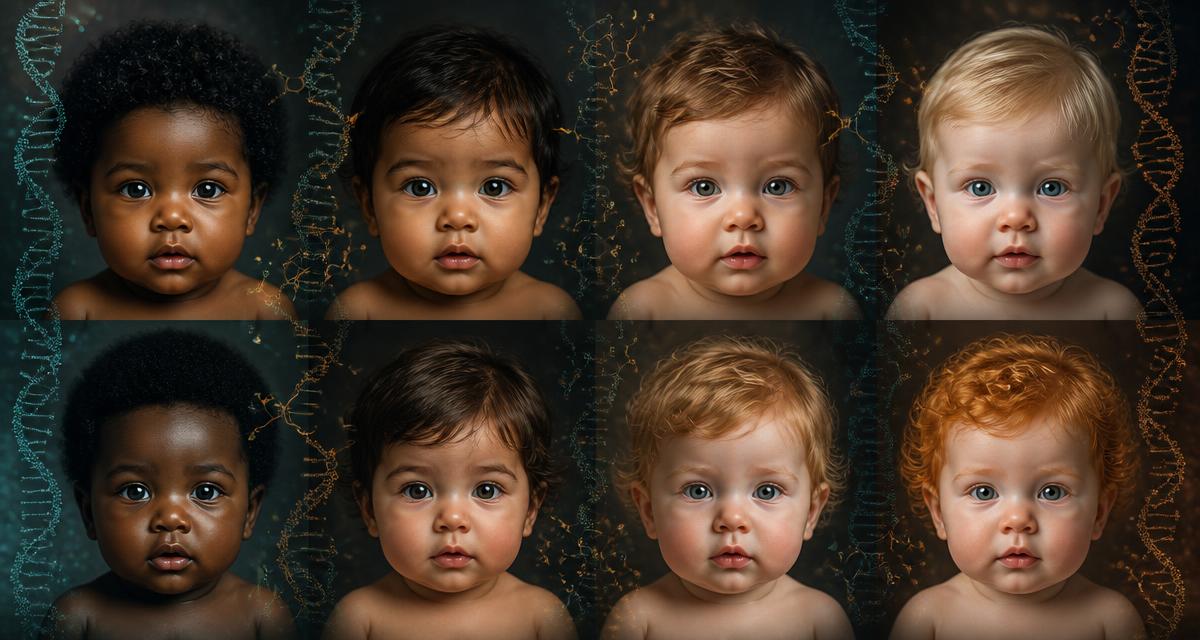
Will My Baby Have Freckles? Genetics and the MC1R Gene
Learn how MC1R, other pigmentation genes and childhood sun exposure shape freckles, from early childhood to adolescence.
Freckles are among the most recognisable inherited skin features, yet they are not passed down in a simple yes-or-no pattern. A baby may inherit a tendency to freckle and still show little change until regular daylight exposure begins. The strongest known genetic influence is variation in MC1R, but skin tone, pigment-production genes, sun response and childhood environment all affect whether freckles become visible and how numerous they are.
What freckles are and why they form
Freckles, medically called ephelides, are small flat areas of increased melanin pigment. They are usually tan, light brown or reddish-brown, with relatively clear edges. Unlike many moles, freckles do not generally contain an increased number of melanocytes, the cells that make pigment. Instead, melanocytes in certain small patches produce and distribute more melanin after ultraviolet (UV) exposure.
Melanin has two principal forms:
- Eumelanin, a brown-black pigment that provides more effective UV protection.
- Phaeomelanin, a red-yellow pigment associated with lighter skin, red or strawberry-blond hair, and increased freckling in some families.
Freckles often darken in spring and summer and fade during winter, although established freckles may remain visible year-round. This seasonal behaviour helps distinguish them from lentigines, sometimes called sun spots, which are more persistent and tend to develop later in life after cumulative sun exposure.
The MC1R gene: the best-known freckling gene
The MC1R gene, located on chromosome 16, provides instructions for the melanocortin 1 receptor. This receptor sits on melanocytes and helps determine which type of melanin they make. When the receptor responds effectively to signalling molecules such as alpha-melanocyte-stimulating hormone, it favours eumelanin production. Certain MC1R variants reduce this signalling, shifting pigment production towards phaeomelanin.
Several common MC1R variants are associated with red hair, very fair skin, sun sensitivity and a higher likelihood of freckles. Examples include R151C, R160W and D294H. These are often called “R” variants because of their stronger association with the red-hair phenotype. Other variants, including V60L or V92M, may have subtler effects and can contribute to freckling without producing red hair.
Why MC1R does not provide a complete answer
A child can have freckles without red hair, red hair without many visible freckles, or neither trait despite carrying an MC1R variant. This is because MC1R acts within a wider pigment network. It also matters which version was inherited from each parent, how those versions function together, and what other pigmentation genes are present.
For example, variants near OCA2 and within HERC2 strongly influence eye colour and broader pigmentation patterns. TYR affects tyrosinase, an enzyme essential for melanin synthesis. SLC24A5 is associated with baseline skin pigmentation, particularly in populations with European ancestry. Genes such as ASIP, IRF4 and BNC2 have also been linked in research studies to variation in skin pigmentation, freckling or sun sensitivity.
As a result, a family history of freckles is more useful than looking at one gene alone. If one or both parents freckle readily, especially in childhood, their child has an increased chance of doing so. It is not a certainty, and exact percentages cannot be responsibly calculated from parental appearance alone.
How parental traits can guide a realistic estimate
Visible traits offer clues, but they are not a genetic test. A dark-haired parent may carry MC1R variants without having red hair; a parent with olive or darker skin may have inherited a freckling tendency that is less visible because of their baseline pigmentation. Freckles are also easier to see on lighter skin, so their apparent absence in relatives does not necessarily mean that no relevant variants are present.
| Parental pattern | What it may suggest | Likely outcome for a child |
|---|---|---|
| Both parents freckle easily in childhood | Strong family tendency towards UV-responsive pigmentation | Higher likelihood of childhood freckles, although number and distribution can differ markedly |
| One freckled, fair-skinned parent; one parent with few freckles | A freckling tendency may be inherited from one side | Possible freckles, often becoming clearer only after sun exposure and depending on baseline skin tone |
| Red-haired parent with freckles | Greater chance of a child inheriting influential MC1R variants | Freckles and sun sensitivity are more likely, but red hair is not guaranteed |
| Neither parent appears freckled, but close relatives are | Relevant pigment variants may be carried without being obvious | Freckles remain possible, particularly if the child has fair skin and regular UV exposure |
Freckles are not limited to one ancestry
Freckles are most conspicuous and most often studied in people with lighter skin, particularly those with northern European ancestry. However, genetically influenced localised pigmentation can occur across many populations. In darker skin tones, freckles may appear as subtle darker brown spots and can be difficult to distinguish from other forms of pigmentation. The genetic pathways involved are diverse, and research has historically been less comprehensive outside European study groups.
Sun exposure determines whether inherited potential is expressed
A genetic tendency does not mean a child should be exposed to extra sunlight to “bring out” freckles. UV radiation is the main environmental trigger, but it also damages skin cells and increases lifetime skin-cancer risk. Freckles themselves are benign; the aim should always be sun protection rather than encouraging pigmentation changes.
For babies under six months, direct sun exposure should be avoided where practical. Shade, a pram canopy used safely with adequate airflow, wide-brimmed hats and lightweight covering clothing are preferred. For older babies and children, use shade and protective clothing alongside broad-spectrum SPF 30 or higher sunscreen on exposed skin, following local paediatric guidance. A child with fair skin, red or blond hair, light eyes or a strong freckling tendency may burn quickly, but all skin tones need UV protection.
It is worth noting that freckles are not a measure of health, beauty or inherited “strength”. They are simply a visible result of pigment biology interacting with light.
When freckles become visible: from babyhood to adolescence
Most newborns do not have classic sun-induced freckles. Their pigment system is still adapting after birth, and they should have very limited direct UV exposure. A few pigmented marks present at birth are more likely to be birthmarks, congenital moles or other pigmentation patterns rather than ephelides.
| Age represented | Typical freckle development | What may change visibly |
|---|---|---|
| Birth to 2 years | Classic freckles are uncommon | Baseline skin tone may shift; inherited sun sensitivity may become apparent through burning rather than freckles |
| Age 3 | Early freckles may appear on the nose, cheeks, shoulders and arms | Often few, pale and seasonal after outdoor play |
| Age 6 | Freckles are commonly more established in predisposed children | Greater number and contrast, especially after summer |
| Age 10 | Distribution and density are easier to judge | Facial freckles may deepen, while body freckles reflect clothing and exposure patterns |
| Age 18 | Freckling may remain stable, increase, or become less prominent relative to changing skin tone | Seasonal darkening often continues; sun habits increasingly influence appearance |
For age-based facial visualisations, freckles at age three should therefore be treated as a plausible early tendency rather than a fixed forecast. At ages six and ten, family freckling patterns and pigmentation traits become more informative. By age eighteen, lifestyle and accumulated UV exposure create substantially more uncertainty than genetics alone.
Freckles, moles and marks that need attention
Freckles are usually uniform in colour, flat and stable in shape, even if they darken with sunlight. Parents should not assume every brown mark is a freckle. New, changing or unusual lesions deserve clinical assessment, particularly if they show asymmetry, irregular borders, multiple colours, rapid enlargement, bleeding, itching or a markedly different appearance from a child’s other marks.
In children, melanoma is rare, and most marks are harmless. Still, a GP or dermatologist can assess uncertainty without alarm. Photographing a questionable mark in consistent light can help document change, but it is not a replacement for medical review.
Frequently asked questions
Can two parents without freckles have a freckled baby?
Yes. Both parents may carry pigment-related variants that are not visibly expressed, or the child may inherit a combination that produces lighter skin and a stronger UV response. Freckles may also be subtle in parents because of skin tone, limited sun exposure or age-related changes.
Does having an MC1R variant mean my child will have red hair?
No. Some MC1R variants have a strong association with red hair when particular combinations are inherited, but many carriers have blond, brown or dark hair. Other genes involved in hair pigment can modify the outcome considerably.
At what age do children usually get freckles?
For children predisposed to freckle, the first clear spots often emerge between ages two and five, after repeated daylight exposure. They commonly become more obvious through primary-school years and may darken during sunnier months.
Should freckles make parents more concerned about sun safety?
Freckles can indicate that skin responds noticeably to UV light, especially alongside very fair skin or a history of burning. They are a useful prompt for consistent sun protection, but every child benefits from shade, protective clothing and appropriate sunscreen.
What our users say
Lena K.
Germany
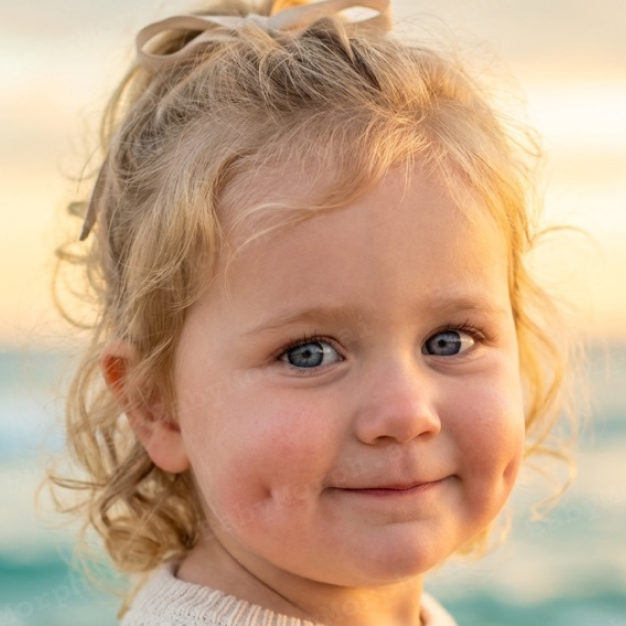
"We used BabyMorph almost as a joke during my third trimester — something to do on a Sunday afternoon. What came out was a baby girl with very light eyebrows, a wider forehead, and this particular way the nose sits slightly to the left. She was born six weeks later. The eyebrows. The forehead. The nose. Nobody believes it was generated before she arrived."
Their AI baby result

Jason T.
United States
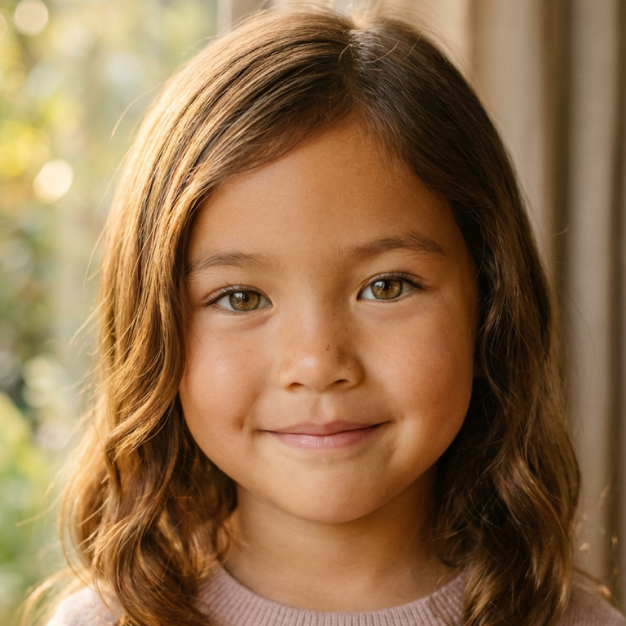
"I have an Asian wife and I've made a habit out of breaking these AI baby tools. Every single one I've tried has completely failed. BabyMorph actually blended her features and mine in a way that made sense — you could see both of us in there without one canceling out the other. People keep asking if it's a real photo."
Their AI baby result
Frequently Asked Questions
Are babies born with freckles?
No. Babies are never born with freckles. They typically begin to appear between the ages of 2 and 4 as the child gets regular exposure to sunlight.
Is the gene for freckles dominant or recessive?
The gene responsible for freckles (MC1R) is dominant. If one parent has prominent freckles, there is a strong chance the trait will pass down.
How do freckles form on the skin?
Freckles, medically known as ephelides, form as small, flat areas of increased melanin pigment on the skin. They are usually tan, light brown, or reddish-brown with clear edges. Melanocytes in specific patches produce and distribute more melanin after ultraviolet (UV) exposure, making them visible. <em>Unlike moles, freckles generally don't have an increased number of pigment-producing cells</em>, but rather those cells are more active.
Does sun exposure cause freckles to appear?
Yes, sun exposure is the primary environmental trigger that causes freckles to appear and darken. While a genetic predisposition is necessary, regular daylight and UV exposure stimulate the melanocytes to produce more melanin, making the freckles visible. They often darken in spring and summer and fade during winter, highlighting the role of sun exposure. However, <strong>it's crucial to prioritize sun protection rather than encouraging pigmentation changes</strong> due to the associated skin cancer risks.
What is the MC1R gene's role in freckling?
The MC1R gene provides instructions for a receptor on melanocytes that helps determine the type of melanin produced. Variants in MC1R can reduce signalling that favors eumelanin (brown-black pigment), shifting production towards phaeomelanin (red-yellow pigment). This shift is associated with lighter skin, red hair, sun sensitivity, and a higher likelihood of freckles. <em>Not everyone with an MC1R variant will have freckles or red hair</em>, as other genes also play a role.
Can a child inherit freckles if neither parent has them?
Yes, a child can inherit a tendency to freckle even if neither parent visibly has them. This is because parents may carry MC1R variants or other relevant pigment genes without showing obvious freckles, especially if they have darker baseline skin tones where freckles are less conspicuous. <strong>A family history of freckles in close relatives can be a more useful indicator</strong> than just parental appearance.
Are freckles more common in certain ethnicities?
Freckles are most conspicuous and extensively studied in people with lighter skin, particularly those of northern European ancestry. However, genetically influenced localized pigmentation, which includes freckles, can occur across many populations. In darker skin tones, freckles may appear as subtle darker brown spots and can be harder to distinguish from other forms of pigmentation. The genetic pathways involved are diverse, and research outside European study groups has historically been less comprehensive. <strong>BabyMorph considers diverse genetic factors</strong> when predicting appearances.
Do freckles provide any protection from the sun?
Freckles themselves do not provide significant protection from the sun. While they are areas of increased melanin, which is a natural photoprotective pigment, their presence indicates a skin type that is generally more susceptible to sun damage. People with freckles typically have lighter skin and often an impaired ability to produce protective eumelanin, making them <strong>more vulnerable to UV radiation and increasing their lifetime risk of skin cancer</strong>. Sun protection remains essential.