Hazel and Amber Eye Variations: Pigment Concentration
How melanin, iris structure and genes shape hazel and amber eyes, with an age-by-age guide to when a child’s colour settles.
Hazel and amber eyes are often grouped together, yet they arise from different balances of melanin, iris structure and light scattering. Neither colour is produced by a single “hazel gene” or “amber gene”. Instead, many genetic variants influence how much pigment is made, where it is deposited within the iris, and how the eye appears under different lighting conditions.
What separates hazel eyes from amber eyes?
The visible part of the eye, the iris, has several layers. In lighter eyes, the front layer of the iris stroma contains relatively little eumelanin, the dark brown-black form of melanin. Light entering this fibrous tissue is scattered, producing blue, grey or greenish effects. As melanin concentration rises, the scattered light is increasingly overlaid by yellow, golden and brown pigment.
Hazel eyes commonly show a mixture of green, gold, light brown and sometimes grey. They often have a darker ring around the pupil, called central heterochromia, with a greener or lighter outer iris. Amber eyes tend to look more uniformly golden, honey-coloured, coppery or yellow-brown. They generally have more visible yellow-red pigment influence and less of the green-grey scattering that makes many hazel eyes appear changeable.
Melanin types and iris appearance
Two main forms of melanin contribute to human colouring. Eumelanin produces brown to nearly black tones, while pheomelanin contributes red-yellow and golden tones. The iris contains both pigment chemistry and structural features, so the final appearance is not simply a measure of “how much melanin” a person has. A modest amount of eumelanin distributed densely in the front iris can look light brown; lower eumelanin combined with warm pigment and scattering can look hazel or amber.
| Feature | Hazel iris | Amber iris | Light brown iris |
|---|---|---|---|
| Typical overall impression | Green-gold-brown mixture | Golden, honey or copper tone | Warm tan to medium brown |
| Colour variation across iris | Often marked, especially around the pupil | Usually more even, though rings may occur | Often relatively even |
| Role of scattering | Frequently creates green or grey-green areas | Less prominent than warm pigment effects | Usually masked by greater eumelanin |
| Appearance in different light | May look greener, browner or more golden | May look brighter gold or deeper copper | Usually changes in brightness more than hue |
Why hazel eyes can appear to change colour
Hazel eyes do not usually change pigment concentration from one day to the next. What changes is the way light reaches the iris and the contrast created by the pupil, clothing, surroundings and camera processing. In bright daylight, a smaller pupil exposes more iris surface and can make green-gold regions easier to see. In dim light, the pupil dilates and the remaining visible iris may appear darker and browner.
Iris structure, not moving pigment
The stroma is made of connective tissue, cells and microscopic fibres. Its arrangement affects how shorter wavelengths of light are scattered back to the observer. This is similar in principle to why a clear sky can look blue, although the iris is biologically much more complex than the atmosphere. A hazel iris with sparse front-layer pigment can reveal greenish or greyish reflected light between warmer, more pigmented areas.
Photography can exaggerate this effect. Phone cameras may alter white balance, saturation and contrast; a flash can brighten golden flecks, while a cool indoor light can make the same iris look greener. For this reason, eye-colour descriptions are best treated as visual categories rather than precise medical measurements.
The genes associated with hazel and amber colouring
Eye colour is polygenic: many inherited DNA variants contribute small or moderate effects. The most influential region for common European light-to-dark eye variation lies around OCA2 and HERC2 on chromosome 15. A regulatory variant within HERC2, often discussed as rs12913832, can reduce OCA2 activity in the iris. Lower OCA2-related pigment production is strongly associated with blue eyes, but it does not by itself determine whether an iris becomes green, hazel or amber.
Other loci help account for the broad middle range between blue and dark brown. These include TYR, which encodes tyrosinase, an enzyme required for melanin synthesis; SLC24A4 and SLC45A2, involved in melanosome function and pigmentation; and IRF4, which has associations with lighter eye and hair pigmentation in some populations. Variants near MC1R are better known for red hair and fair skin, but may contribute indirectly to warmer pigment tendencies in some families.
Genes such as PAX3, MITF and EDNRB have important roles in melanocyte development. Rare harmful variants in pigment-development pathways can cause unusually light irises or conditions with eye-colour differences, but they are not ordinary explanations for healthy hazel eyes. Facial-development genes such as RUNX2, PAX3 and EDAR influence aspects of craniofacial or ectodermal development, yet they should not be treated as direct predictors of a child’s exact iris shade.
Why parent eye colour is an incomplete guide
Two hazel-eyed parents may have a blue-eyed, green-hazel, amber, brown or intermediate-eyed child, depending on the variants each carries. A brown-eyed parent may also carry variants associated with lower iris pigmentation that are not obvious in their own appearance. Family patterns across grandparents, siblings and close relatives can offer more information than a simple two-parent colour chart, but they still cannot provide a reliable percentage for a specific shade.
- Hazel and amber are descriptive categories with overlapping boundaries.
- Visible eye colour reflects both pigment amount and its distribution within the iris.
- Common genetic tests can estimate broad light-versus-dark tendencies better than exact mixed shades.
- Lighting and imaging conditions can make the same hazel iris appear substantially different.
When hazel or amber colouring becomes visible
At birth, many babies of European ancestry have blue-grey or slate-coloured eyes because the iris has not yet accumulated much visible melanin. This does not mean the child will retain blue eyes. Melanocytes are present, but their pigment production and deposition continue after birth. Babies with ancestry from populations in which darker eyes are more common may have brown eyes from birth, though some further deepening can still occur.
| Child age | What may be visible | How stable is the shade? |
|---|---|---|
| Birth to 6 months | Blue-grey, dark grey, brown or early warm tones | Often changing, especially in initially light irises |
| 6 to 18 months | Increasing brown, gold or green influence; central rings may emerge | Colour direction is becoming clearer |
| Age 3 | Hazel versus amber pattern is usually recognisable | Generally fairly stable, but subtle shifts remain possible |
| Age 6 and 10 | More settled pigment distribution and clearer iris details | Usually stable in ordinary circumstances |
| Age 18 | Adult iris appearance, affected mainly by lighting rather than development | Typically stable |
For child images rendered at ages 3, 6, 10 and 18, it is reasonable to portray a broadly consistent underlying eye category after age 3. The finer balance of green, gold and brown should remain uncertain, because it depends on many variants not visible from parental eye colour alone.
Central heterochromia, limbal rings and normal variation
A golden or brown ring close to the pupil is common in hazel eyes and is often termed central heterochromia. It reflects a local difference in pigment distribution rather than a separate eye colour. A darker outer border, the limbal ring, is also common, particularly in children and younger adults. It can make a lighter iris look more vivid by increasing contrast with the white of the eye.
Small differences between the two eyes are frequently harmless. However, a new change in one iris during childhood or adulthood, a white pupil reflex, eye pain, light sensitivity, reduced vision, or a pupil that looks unusually shaped should be assessed promptly by an optometrist or ophthalmologist. Sudden acquired colour change is not explained by ordinary hazel-eye variation.
Frequently asked questions
Can two brown-eyed parents have a hazel- or amber-eyed child?
Yes. Brown eyes can occur in people who carry a mixture of pigmentation variants, including variants associated with lower iris melanin. If a child inherits a combination that produces less front-layer pigment or a different pigment distribution, hazel or amber may result. The chance cannot be accurately calculated from parental eye labels alone.
Are amber eyes simply a type of hazel eye?
Not necessarily. The categories overlap in everyday language, but amber usually describes a more consistently golden or copper-toned iris. Hazel more often describes a visibly mixed iris with green, gold and brown zones. There is no universal clinical boundary between them.
Do hazel eyes genuinely change colour with mood?
Mood does not rapidly alter iris pigment. Emotional states can change pupil size, and that may slightly alter how much iris is visible and how dark it seems. Lighting, clothing colours and photographic processing are much stronger explanations for apparent short-term changes.
Can eye colour continue changing after age three?
Yes, but major changes become less likely after early childhood. Some children develop a little more brown or gold pigment through preschool years, and subtle changes may continue into later childhood. By ages 6 to 10, the underlying colour pattern is usually well established.
What our users say
Lena K.
Germany
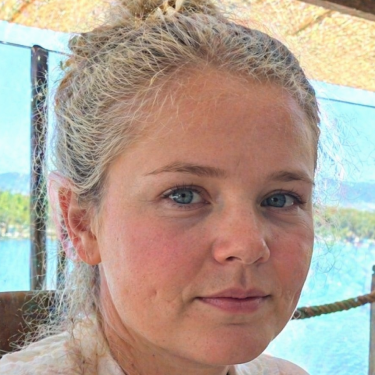
"We used BabyMorph almost as a joke during my third trimester — something to do on a Sunday afternoon. What came out was a baby girl with very light eyebrows, a wider forehead, and this particular way the nose sits slightly to the left. She was born six weeks later. The eyebrows. The forehead. The nose. Nobody believes it was generated before she arrived."
Their AI baby result


Jason T.
United States
"I have an Asian wife and I've made a habit out of breaking these AI baby tools. Every single one I've tried has completely failed. BabyMorph actually blended her features and mine in a way that made sense — you could see both of us in there without one canceling out the other. People keep asking if it's a real photo."
Their AI baby result
Frequently Asked Questions
When do these specific traits mature fully?
While core structural baselines emerge at birth, overall skeletal proportionality and cartilage mapping continue adjusting actively through childhood.
What is the difference between hazel and amber eye color?
Hazel eyes typically display a mixture of green, gold, light brown, and sometimes grey, often with a darker ring around the pupil (central heterochromia) and a lighter outer iris. Amber eyes, in contrast, tend to appear more uniformly golden, honey-colored, coppery, or yellow-brown, with a stronger influence of yellow-red pigment and less of the green-grey light scattering seen in hazel eyes. The distinction lies primarily in the balance and distribution of eumelanin and pheomelanin, as well as the iris's structural properties.
Why do hazel eyes appear to change color sometimes?
Hazel eyes do not actually change their pigment concentration. The perceived color variation is due to how light interacts with the iris, as well as contrasts created by factors like pupil size, clothing, surrounding environment, and camera processing. In bright light, a smaller pupil can highlight green-gold regions, while in dim light, a dilated pupil makes the iris appear darker. <em>Iris structure</em>, not shifting pigment, influences how shorter wavelengths of light are scattered, creating these changeable effects. Photography can further exaggerate these variations by altering white balance or saturation.
What genes determine hazel and amber eye colors?
Eye color is polygenic, meaning many inherited DNA variants contribute to its final appearance. While the <strong>OCA2</strong> and <strong>HERC2</strong> genes on chromosome 15 are highly influential, particularly for blue eyes, they don't solely determine hazel or amber. Other genes like <em>TYR</em>, <em>SLC24A4</em>, <em>SLC45A2</em>, and <em>IRF4</em> also play roles in melanin synthesis and distribution. Variants near <em>MC1R</em>, known for red hair, can indirectly influence warmer pigment tendencies. It's the complex interplay of these multiple genes that results in the diverse shades of hazel and amber.
Can two hazel-eyed parents have a blue-eyed child?
Yes, two hazel-eyed parents can absolutely have a blue-eyed, green-eyed, amber-eyed, or brown-eyed child. Eye color inheritance is complex and not simply a blend of parents' colors. Each parent carries a combination of genetic variants, some of which may be recessive or not fully expressed in their own phenotype. These underlying genetic instructions can be passed on, leading to a child with an eye color different from either parent. Family patterns across generations can offer some clues, but exact predictions are difficult. BabyMorph can help visualize potential outcomes based on parental features.
What is the role of melanin in hazel and amber eyes?
Melanin is crucial, with two main forms: <strong>eumelanin</strong>, which creates brown-black tones, and <strong>pheomelanin</strong>, contributing red-yellow and golden hues. Hazel and amber eyes arise from a specific balance and distribution of these melanins within the iris, alongside structural features. Amber eyes generally have more visible yellow-red pheomelanin influence, while hazel eyes combine a modest amount of eumelanin with pheomelanin and light-scattering effects to produce their characteristic green-gold-brown mixture. The amount and location of melanin, not just its presence, dictate the final eye color.
How does iris structure affect eye color appearance?
The iris structure significantly influences eye color, particularly in lighter shades like hazel and amber. The <strong>stroma</strong>, the front layer of the iris, consists of connective tissue and microscopic fibers. The arrangement of these fibers affects how shorter wavelengths of light are scattered back to the observer. In hazel eyes, sparse front-layer pigment can allow greenish or greyish reflected light to be seen between warmer, more pigmented areas. This light scattering, similar to how the sky appears blue, works with melanin distribution to create the overall perceived hue and its changeable qualities. <em>It's not just pigment, but how light interacts with the tissue</em>.
When does a child's final eye color settle?
A child's eye color at birth is often not their permanent color, especially for lighter hues. Melanin production and distribution in the iris can continue to develop and change over the first few months and even years of life. While a definitive color can usually be observed by 6 to 9 months, it's not uncommon for slight shifts to occur up to the age of three, or even later for some individuals. The final eye color, whether hazel, amber, or another shade, is typically established as melanin fully matures in the iris, offering a clear picture of their genetic expression. If you're wondering what your child's final eye color might be, tools like BabyMorph can give you a fun glimpse into future possibilities.