Prominent Cheekbones: East Asian Phenotype Expression
How prominent cheekbones are inherited, why the zygomatic bone drives so much of family resemblance, and how the trait expresses in mixed-heritage children.
Cheekbones do more work in facial recognition than almost any other feature. Before anyone consciously registers a nose or a chin, they read the width and height of the midface — which is why prominent cheekbones are one of the first things people point to when they say a child "looks just like" a parent.
The anatomy: what a cheekbone actually is
The visible cheekbone is the zygomatic bone, a paired bone that connects the maxilla (upper jaw), the frontal bone (forehead), the temporal bone and the sphenoid. Its shape contributes three things to a face:
- Malar projection — how far forward the cheek sits from the side profile.
- Bizygomatic width — the distance between the two outermost points, the single biggest driver of a "wide" versus "narrow" face.
- Zygomatic arch flare — how much the arch sweeps outward toward the ear, which shapes the transition into the temples.
Overlaid on the bone is the buccal fat pad and the zygomaticus muscles, which soften or sharpen the visible result. Two people with identical bone can look quite different depending on soft-tissue distribution.
The East Asian phenotype expression
Higher bizygomatic width and greater malar projection are among the most consistently documented craniofacial characteristics in East Asian populations, alongside a flatter nasal bridge and a shorter midface. Anthropometric studies repeatedly find greater average facial width-to-height ratios compared with European averages.
Genetically, this is not one gene. Variants in EDAR (notably the V370A variant, which is at high frequency across East Asia and also influences hair thickness and sweat gland density), plus loci near RUNX2 and several genes involved in cranial neural crest migration, have all been associated with midface morphology. The trait is polygenic and additive — it comes through in degrees, not on/off.
How it inherits in mixed-heritage families
Because malar projection is additive rather than dominant/recessive, a child of one East Asian parent and one European parent typically lands in the middle rather than copying one side. In practice this usually reads as:
- Noticeably defined cheekbones, but with less flare toward the temples
- A slightly higher nasal bridge than the East Asian parent, slightly lower than the European parent
- A face width-to-height ratio between the two parental values
- Frequently, a combination that photographs extremely well — high cheekbones with a more projected midface is a widely admired configuration
Sibling variation is real, though. Additive traits sample across a range, so one child can land closer to one parent's proportions than another.
When cheekbones become visible
This is the part most parents miss. Infants have a large buccal fat pad, and the midface is proportionally short. Cheekbone structure is essentially invisible in a newborn.
| Age | What is visible |
|---|---|
| 0–2 years | Buccal fat dominates; bone structure hidden |
| 3–6 years | Midface lengthens; first hints of definition |
| 7–12 years | Zygomatic width becomes clearly readable |
| 13–18 years | Buccal fat reduces, arches project; adult contour emerges |
This is exactly why a prediction rendered at age 10 or 18 tells you far more about inherited bone structure than a newborn render does. If cheekbones are the feature you care about, look at the older ages.
Related traits that travel with it
Midface morphology rarely changes alone. Where you see a strong zygomatic structure, you often also see:
- A wider intercanthal distance
- A flatter, broader nasal base
- Fuller lower eyelid support, which reduces the appearance of under-eye hollowing with age
- Thicker hair shaft diameter, via the same EDAR variant
- Slower visible facial ageing — projected malar bone supports overlying soft tissue for longer
Reading it in your own family
If you want a rough sense of what a child might inherit, compare the two parents on three things: the widest point of the face relative to face height, how far the cheek projects in a side profile, and how sharply the arch runs toward the ear. A child will usually sit between the two parents on each of those measurements independently — which is why children so often end up with one parent's width and the other's projection.
Summary
Prominent cheekbones are a polygenic, additive trait rooted in zygomatic bone geometry, strongly represented in East Asian populations, and expressed at intermediate levels in mixed-heritage children. They are one of the most reliable carriers of family resemblance — but only once the child is old enough for the bone to show through the soft tissue.
What our users say
Lena K.
Germany
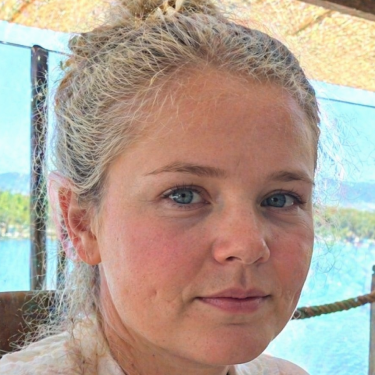
"We used BabyMorph almost as a joke during my third trimester — something to do on a Sunday afternoon. What came out was a baby girl with very light eyebrows, a wider forehead, and this particular way the nose sits slightly to the left. She was born six weeks later. The eyebrows. The forehead. The nose. Nobody believes it was generated before she arrived."
Their AI baby result

Jason T.
United States
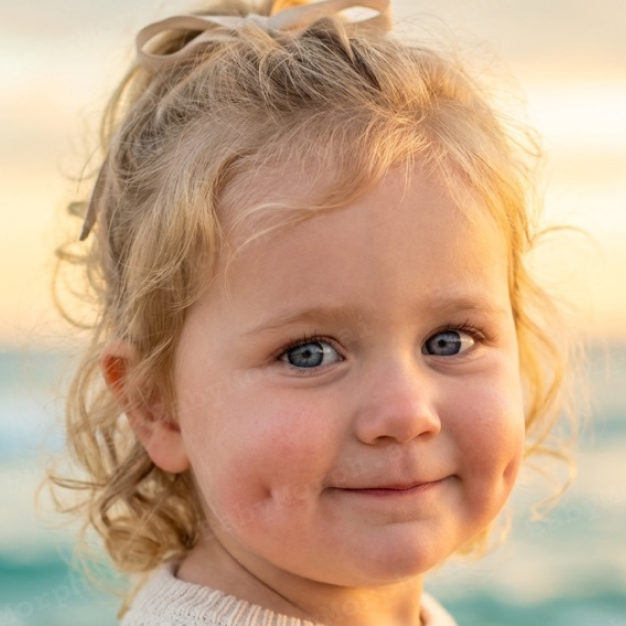
"I have an Asian wife and I've made a habit out of breaking these AI baby tools. Every single one I've tried has completely failed. BabyMorph actually blended her features and mine in a way that made sense — you could see both of us in there without one canceling out the other. People keep asking if it's a real photo."
Their AI baby result
Frequently Asked Questions
Why do East Asians typically have prominent cheekbones?
The EDAR V370A variant, which is present in over 90% of Han Chinese and Japanese populations, drives midface projection along with thicker hair and shovel-shaped incisors. Other genes like RUNX2 and PAX3 fine-tune zygomatic bone volume.
Are Asian cheekbones dominant in mixed-race children?
They tend to persist even in mixed families because cheekbone architecture is polygenic and semi-dominant. In our AI model, midface prominence carries over to the child roughly 60% of the time when the East Asian parent's features are the clearer input.
When do baby cheekbones become visible?
The underlying zygomatic bone shape is present at birth, but baby fat covers it until around ages 5–7. Full adult contour finishes developing between ages 14 and 18.
Do cheekbones come from mom or dad?
Both. Craniofacial bone development is a polygenic trait — both parents contribute alleles, and neither side dominates on principle.
What is the science behind prominent cheekbones?
Prominent cheekbones are largely determined by the shape and projection of the <em>zygomatic bone</em>. This bone contributes to malar projection (how far forward the cheek sits), bizygomatic width (facial width), and zygomatic arch flare. It's a complex, polygenic trait influenced by several genes, including variants in EDAR.
How do cheekbones express in mixed heritage children?
In mixed-heritage children, prominent cheekbones typically express as an intermediate trait rather than strictly dominant or recessive. A child of one East Asian and one European parent often exhibits noticeably defined cheekbones, but with less flare than the East Asian parent. Their overall face width-to-height ratio usually falls between the two parental values.
What other facial traits are linked to high cheekbones?
Prominent cheekbones, particularly those linked to East Asian phenotypes, are often associated with other distinct facial traits. These can include a wider intercanthal distance, a flatter and broader nasal base, and fuller lower eyelid support, which contributes to slower visible facial aging. The EDAR variant also often co-occurs with thicker hair shaft diameter.
Can BabyMorph predict future cheekbone structure?
Yes, BabyMorph can predict future cheekbone structure, but it's important to consider the age of the generated image. Due to the presence of baby fat, cheekbone definition is often obscured in infant predictions. For the clearest representation of inherited bone structure, especially concerning prominent cheekbones, we recommend viewing predictions for ages 10 or 18, as the bone structure becomes more visible then.