Thick Eyebrows Genetics: Patterns and Inheritance
Learn how eyebrow density, shape and colour are inherited, which genes contribute, and when fuller brows become visible in childhood.
Thick eyebrows are often noticeable in family photographs: a child may inherit a dense brow line, a pronounced arch, or a strong central connection that resembles one parent or a grandparent. Yet brow appearance is not passed down as a single, simple trait. Density, hair thickness, colour, shape, spacing and growth pattern each have partly separate biological influences, alongside normal changes during childhood and puberty.
What people mean by “thick eyebrows”
In everyday language, thick eyebrows usually describe brows with plentiful visible hairs and a broad, dark-looking outline. Anatomically, however, several features contribute to this impression. Two people can both be described as having thick brows for very different reasons.
| Feature | What it describes | How it changes the appearance of thickness |
|---|---|---|
| Follicle density | The number of hair follicles within the eyebrow skin | More follicles generally create fewer visible gaps |
| Hair shaft diameter | The width of individual eyebrow hairs | Coarser hairs make a brow look fuller even at moderate density |
| Hair pigmentation | The amount and type of melanin in brow hairs | Darker hairs create more contrast against the skin |
| Brow breadth and contour | The vertical height, arch and tail length of the brow | A broader or less tapered brow can appear heavier |
| Hair direction | The angle at which hairs emerge and lie over one another | Upward or overlapping hairs can give a denser visual effect |
The eyebrow itself sits over the supraorbital ridge of the frontal bone. Its apparent placement is therefore influenced not only by hair follicles but also by facial proportions: forehead height, eye socket shape, upper eyelid anatomy and the soft tissue around the brow. A child may have the hair pattern of one parent while their brow position resembles the other side of the family.
The genetics behind eyebrow density and form
Many genes, rather than one “thick eyebrow gene”
Eyebrow traits are polygenic, meaning that numerous genetic variants contribute small effects. Research on facial morphology has identified genes involved in craniofacial development, hair formation and pigmentation, but no reliable single gene test can tell parents whether a child will have thick eyebrows.
Genes such as EDAR influence the development of ectodermal structures, including hair follicles, teeth and sweat glands. A well-studied EDAR variant is associated with particular hair and facial characteristics in some East Asian and Indigenous American populations, though it does not determine eyebrow thickness on its own. Variants affecting hair shaft structure and follicle behaviour may alter how full brows look, but their effects depend on the wider genetic background.
Facial bone and soft-tissue patterning also matters. PAX3 is involved in early neural crest and facial development, while RUNX2 contributes to bone development. These and many other developmental genes can influence the proportions around the eyes and forehead that frame the eyebrows. Common variation in such genes is not a diagnosis and does not create a fixed outcome; it is one part of ordinary human facial variation.
Pigment genes can make brows look denser
Dark eyebrows often appear thicker than pale eyebrows with the same number of hairs. Pigmentation involves a different set of pathways from follicle density. MC1R affects the balance between darker eumelanin and lighter reddish-yellow pheomelanin, particularly in people with European ancestry. Variants in OCA2 and the nearby regulatory region within HERC2 are important contributors to eye and hair pigmentation variation, especially in European populations. TYR, which encodes tyrosinase, is central to melanin production, while SLC24A5 has an established role in pigmentation differences across populations.
These genes do not operate as a simple “dark parent equals dark-browed child” rule. A child can inherit lighter pigmentation variants from both family lines, or have brows that are lighter than their scalp hair in early childhood. Skin tone also affects contrast: identical brown hairs may look more or less prominent against different complexions.
How thick eyebrows are inherited in families
Parents often notice that eyebrow density seems to skip a generation. This is plausible because a child receives a new combination of many variants from both sides of the family. A grandparent’s broad, straight brow shape may reappear when the relevant variants combine with compatible traits from the other parent. This does not mean the trait has literally bypassed a generation; it may simply have been less visible in an intervening relative.
Family resemblance is most informative when it is assessed across several relatives rather than one parent alone. Look for recurring patterns in siblings, grandparents, aunts and uncles:
- dense hairs across the inner brow rather than only at the arch;
- coarse, strongly pigmented brow hairs;
- a long tail that remains full towards the temple;
- a low, straight or strongly arched brow position;
- a tendency for the two brows to meet or nearly meet at the centre.
A connected brow, sometimes called synophrys when marked, is also variable in the general population. It reflects hair distribution in the glabellar area between the eyebrows. Mild central hair growth is commonly familial and usually has no medical significance. In rare circumstances, unusually prominent synophrys occurs alongside other distinctive developmental features and may be assessed as part of a broader clinical picture. On its own, it is not evidence of a genetic condition.
Sex hormones add another layer. Androgens influence the conversion of fine vellus hairs into thicker terminal hairs in several body regions. During puberty, brows may become darker, coarser or more defined, especially in boys but also in girls. Therefore, a child’s eyebrow appearance at age six is not a final reading of their inherited adult brow pattern.
When eyebrows become visible and how they change
Eyebrow follicles begin forming before birth as part of fetal skin and hair development. By around the end of the first trimester and into the second trimester, the basic follicular map is being established. The number and distribution of follicles are largely set early, but hair calibre, pigment and the visibility of the brow continue to change for years.
| Age represented | Typical eyebrow appearance | What may still change |
|---|---|---|
| Birth to 2 years | Often fine, pale or sparse-looking, even in families with dense brows | Early hair shedding, pigmentation and facial fat distribution |
| Age 3 | The brow line is usually visible but may remain soft and lightly defined | Hair darkening and the apparent arch as the face lengthens |
| Age 6 | Family brow shape and spacing are often easier to recognise | Density can still look modest if hairs are fine or fair |
| Age 10 | Brows commonly appear more stable, with clearer contour and pigmentation | Early pubertal hormonal effects may begin |
| Age 18 | Closer to adult thickness, colour and hair texture | Late puberty, grooming habits and individual hormonal variation |
For an AI-rendered child face, eyebrows at age three should usually be interpreted as a probable childhood expression, not a miniature adult brow transplanted onto a toddler. At ages six and ten, inherited spacing, arch direction and relative density can be more meaningful. By age eighteen, pigmentation and hair calibre may look substantially more mature, although exact density remains uncertain.
Why prediction has limits
Genetics can support sensible probability estimates, especially where both parents and several close relatives share dark, dense eyebrows. In that situation, a child is more likely than average to show a similarly strong brow presence. If one parent has dense dark brows and the other has fine light brows, the possible outcomes are wider: the child may inherit dense but lighter brows, sparse but dark brows, or an intermediate combination.
Non-genetic influences matter too. Nutritional deficiency, thyroid disease, inflammatory skin conditions, alopecia areata, repeated plucking and certain medicines can alter eyebrow growth or cause patchiness. These factors do not rewrite inherited follicle placement, but they can change what is visible. Sudden eyebrow thinning, scaling, redness or sharply patchy loss is worth discussing with a GP or dermatologist rather than treating as a normal family trait.
Frequently asked questions
Are thick eyebrows dominant?
No. Thick eyebrows are not usually inherited as a dominant or recessive single-gene trait. Their visible density results from many genetic influences on follicles, hair thickness, pigmentation and facial anatomy, plus age and hormones.
Can two parents with thin eyebrows have a child with thick eyebrows?
Yes. Both parents may carry variants associated with fuller brows that are less obvious in their own combination of traits. A child may also inherit darker pigmentation or coarser hair shafts, making their eyebrows appear denser than either parent’s.
At what age can you tell whether a child will have thick eyebrows?
Some family resemblance is visible by age three, and shape or spacing is often clearer by age six. However, adult-like thickness is more reliably assessed after puberty, when brow hair colour and calibre may increase.
Do dark eyebrows always mean more eyebrow hair?
No. Darkness can create an impression of density. A person with fewer but heavily pigmented, coarse hairs may look more thick-browed than someone with more follicles but fine, pale hairs.
What our users say
Lena K.
Germany
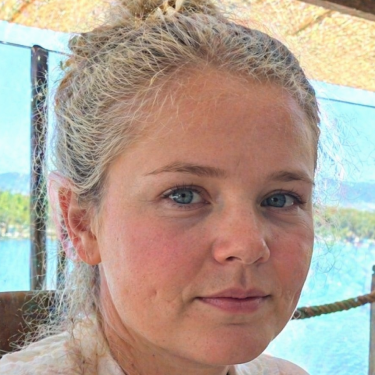
"We used BabyMorph almost as a joke during my third trimester — something to do on a Sunday afternoon. What came out was a baby girl with very light eyebrows, a wider forehead, and this particular way the nose sits slightly to the left. She was born six weeks later. The eyebrows. The forehead. The nose. Nobody believes it was generated before she arrived."
Their AI baby result


Jason T.
United States
"I have an Asian wife and I've made a habit out of breaking these AI baby tools. Every single one I've tried has completely failed. BabyMorph actually blended her features and mine in a way that made sense — you could see both of us in there without one canceling out the other. People keep asking if it's a real photo."
Their AI baby result

Frequently Asked Questions
When do these specific traits mature fully?
While core structural baselines emerge at birth, overall skeletal proportionality and cartilage mapping continue adjusting actively through childhood.
Are thick eyebrows inherited or is it environmental?
Thick eyebrows are primarily <em>inherited</em>, with numerous genes influencing density, shape, and color, alongside normal developmental changes during childhood and puberty. Environmental factors like plucking or certain medical conditions can affect appearance, but the underlying genetic predisposition determines the natural potential for thick brows. It's a complex interplay rather than a single gene. Many traits contribute to how thick eyebrows appear, including follicle density and hair shaft diameter.
What is the science behind eyebrow thickness genetics?
Eyebrow thickness is a <strong>polygenic trait</strong>, meaning it's influenced by multiple genes working together. Genes involved in craniofacial development, hair follicle formation (like <em>EDAR</em>), and pigmentation (such as <em>MC1R</em>, <em>OCA2</em>, and <em>TYR</em>) all contribute. These genes don't act in isolation; their variants combine to create a diverse range of eyebrow appearances. Additionally, facial bone structure and soft tissue patterning around the eyes also play a significant role in how eyebrows are framed and perceived.
Can I predict my baby's eyebrow thickness?
Predicting your baby's exact eyebrow thickness is challenging because it's a polygenic trait influenced by many genes from both parents. While you can observe patterns of thick eyebrows in your family tree, no single gene test can definitively forecast this. Tools like BabyMorph can give you an AI-generated glimpse of potential facial features, but for specific traits like brow density, it provides an approximation based on combined parental features rather than a precise genetic prediction. Eyebrow appearance also evolves significantly through childhood.
Do dark eyebrows always appear thicker than light ones?
Dark eyebrows often <strong>appear thicker</strong> than lighter ones, even if they have the same number of hairs, due to increased contrast against the skin. Hair pigmentation genes, such as <em>MC1R</em> and <em>OCA2</em>, determine the amount of melanin in the brow hairs, making them more visible. This visual effect means that a child with genetically darker brows may be perceived as having thicker eyebrows, even if their follicle density is similar to someone with lighter, less pigmented brows. Skin tone also impacts this contrast.
Can eyebrow thickness skip a generation?
Eyebrow density or shape can indeed appear to 'skip a generation' because a child inherits a complex combination of genetic variants from both parents. A grandparent's distinct brow trait might reappear in a grandchild if the relevant genetic components align, even if it was less noticeable in the intervening parent. This is due to the polygenic nature of the trait, where different gene combinations can lead to varied expressions across generations. It doesn't mean a gene is truly skipped, but rather its expression may be masked or less prominent.
When do eyebrows get thicker during childhood?
Eyebrows typically become <strong>thicker, darker, and more defined</strong> during puberty, especially due to the influence of sex hormones like androgens. Fine vellus hairs convert into coarser terminal hairs in various body regions, including the eyebrows. Therefore, a child's eyebrow appearance at a young age, such as six years old, is not a final indicator of their adult brow pattern. The full expression of genetically inherited thickness and shape usually develops later.
What is the role of genes like EDAR in eyebrow development?
Genes like <em>EDAR</em> (Ectodysplasin A Receptor) play a role in the development of ectodermal structures, which include hair follicles, teeth, and sweat glands. A specific variant of <em>EDAR</em> is associated with certain hair and facial characteristics in some populations, influencing features that can contribute to overall brow appearance. While <em>EDAR</em> doesn't determine eyebrow thickness on its own, its variants contribute to the complex genetic background that shapes hair structure and follicle density. Other genes are also crucial for facial and hair development. For more information, you can consult resources on human genetics.