Future Baby Face Generator Online Free
Turn two parent photos into a realistic baby face in under a minute — free. How it works, how accurate it is, and tips for the best result.
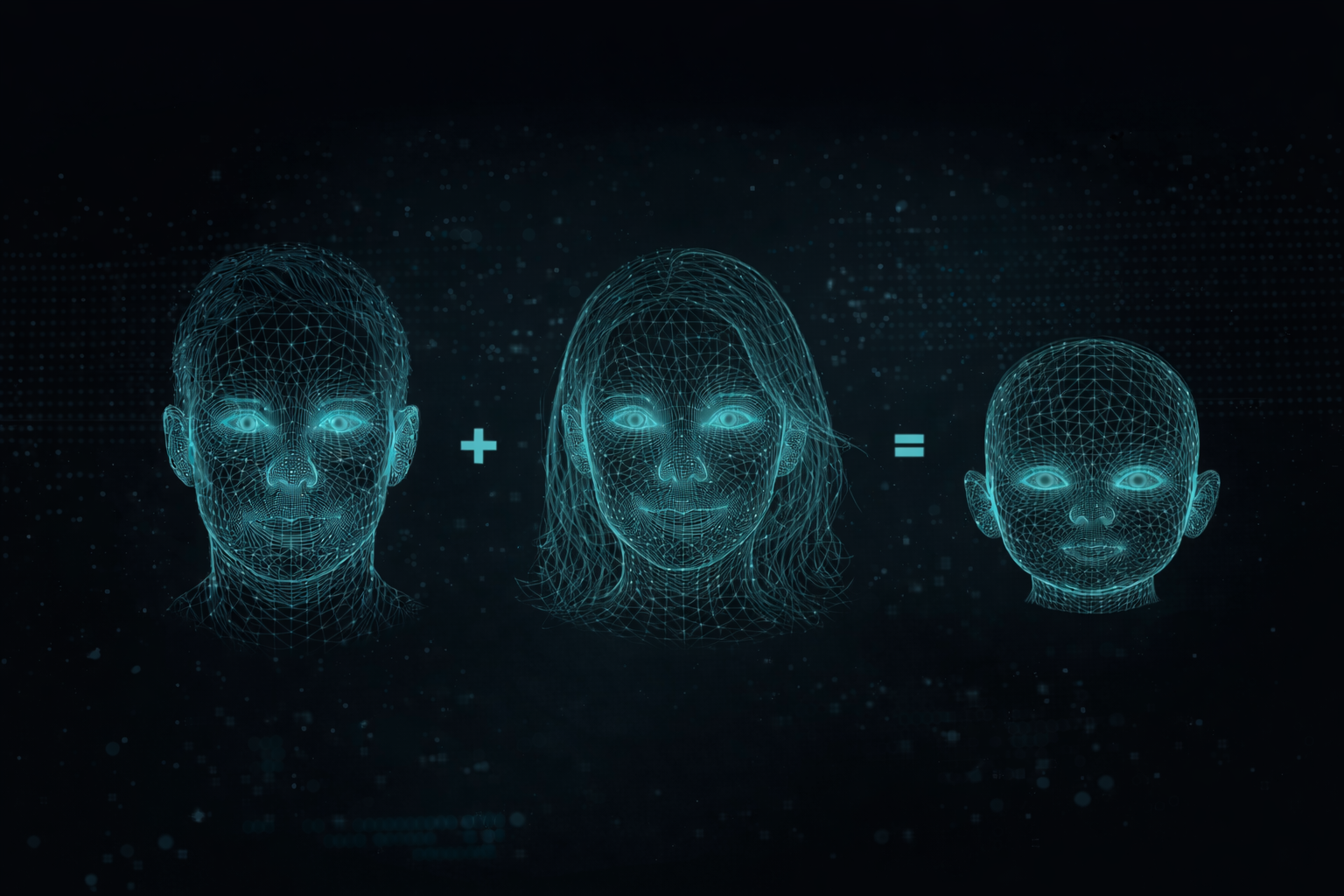
Searching for a future baby face generator online free usually ends the same way: a wall of look-alike sites, a blurry cartoon result, and a paywall right before the download. This guide explains what these tools actually do, which parts of a child's face can genuinely be predicted from two parent photos, and how to get a result that looks like a real child instead of a filtered stock photo.
What a future baby face generator actually does
Older "baby makers" from the 2010s were image blenders. They found a handful of landmarks on each parent's face — pupils, nose tip, mouth corners — averaged the coordinates, and cross-faded the two photographs. The output always looked like a ghost of two adults, because that is exactly what it was.
Modern generators work differently. The pipeline has three distinct stages:
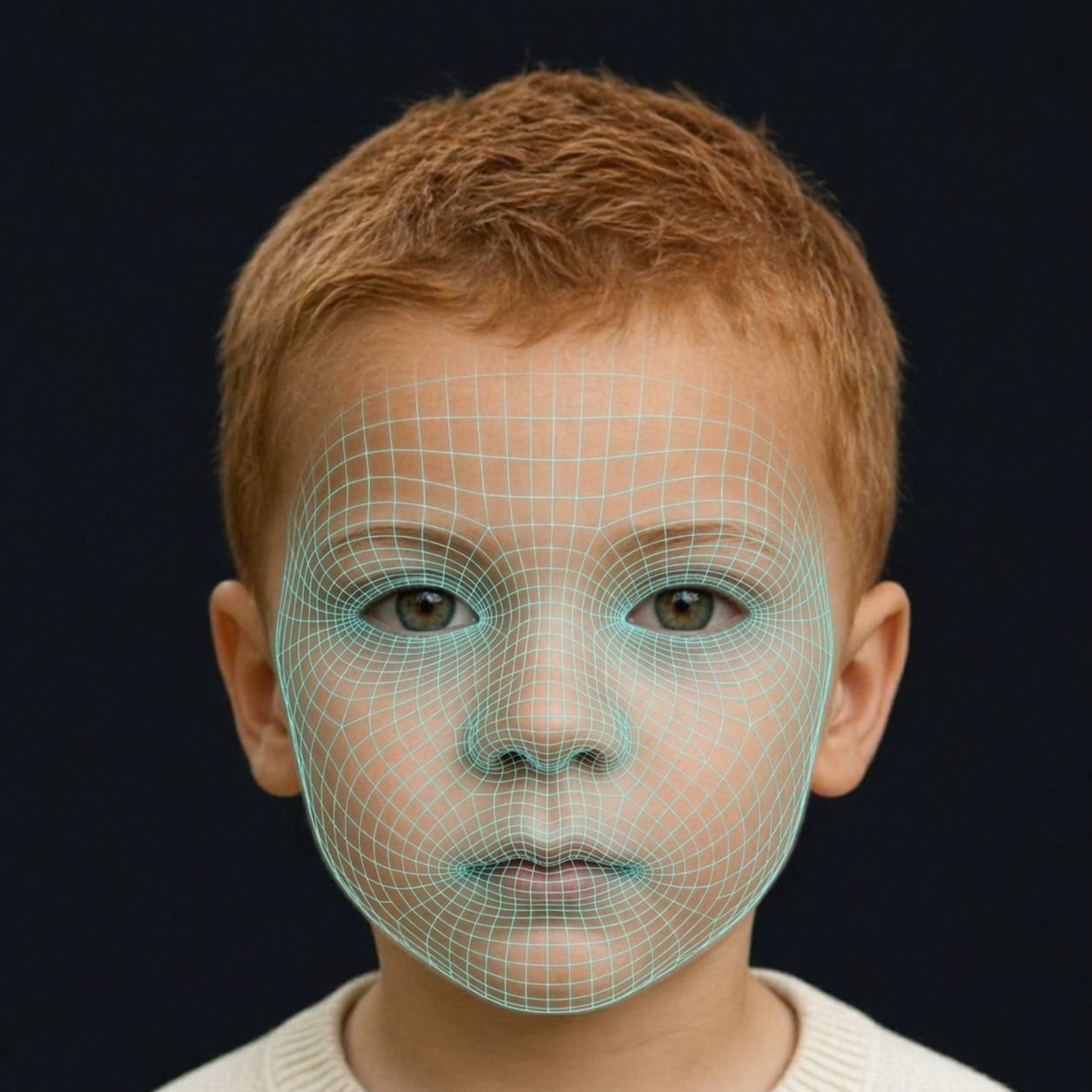
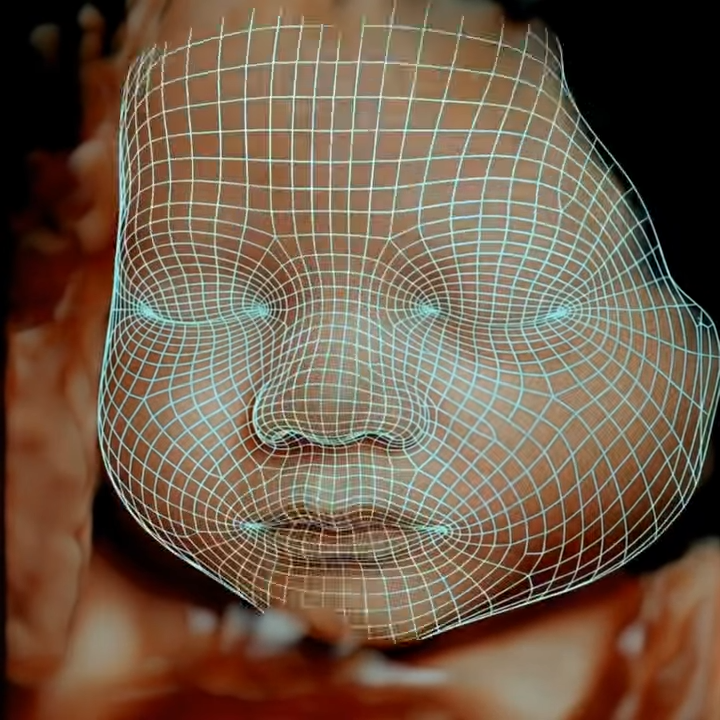
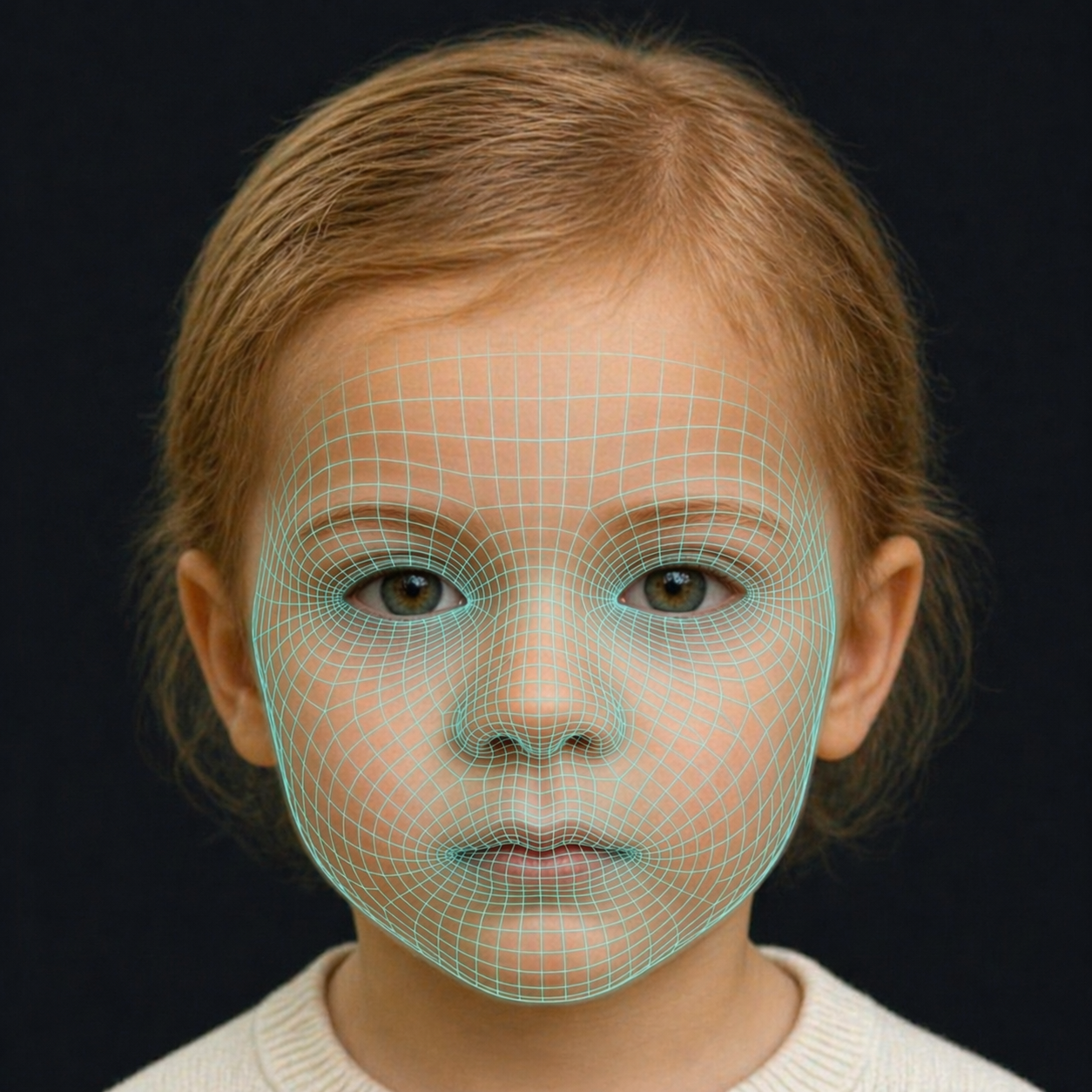
- Facial encoding. Each parent photo is converted into a numeric descriptor of the face — hundreds of measurements covering interocular distance, nasal bridge height, jaw angle, lip volume, orbital depth, hairline shape and pigment values for skin, hair and iris.
- Trait weighting. The two descriptors are combined, but not 50/50 on every axis. Traits with strong dominance patterns (dark iris pigment, curl pattern, dimples) are weighted toward the dominant parent, while polygenic traits (nose width, face length, cheekbone projection) are blended within a plausible range.
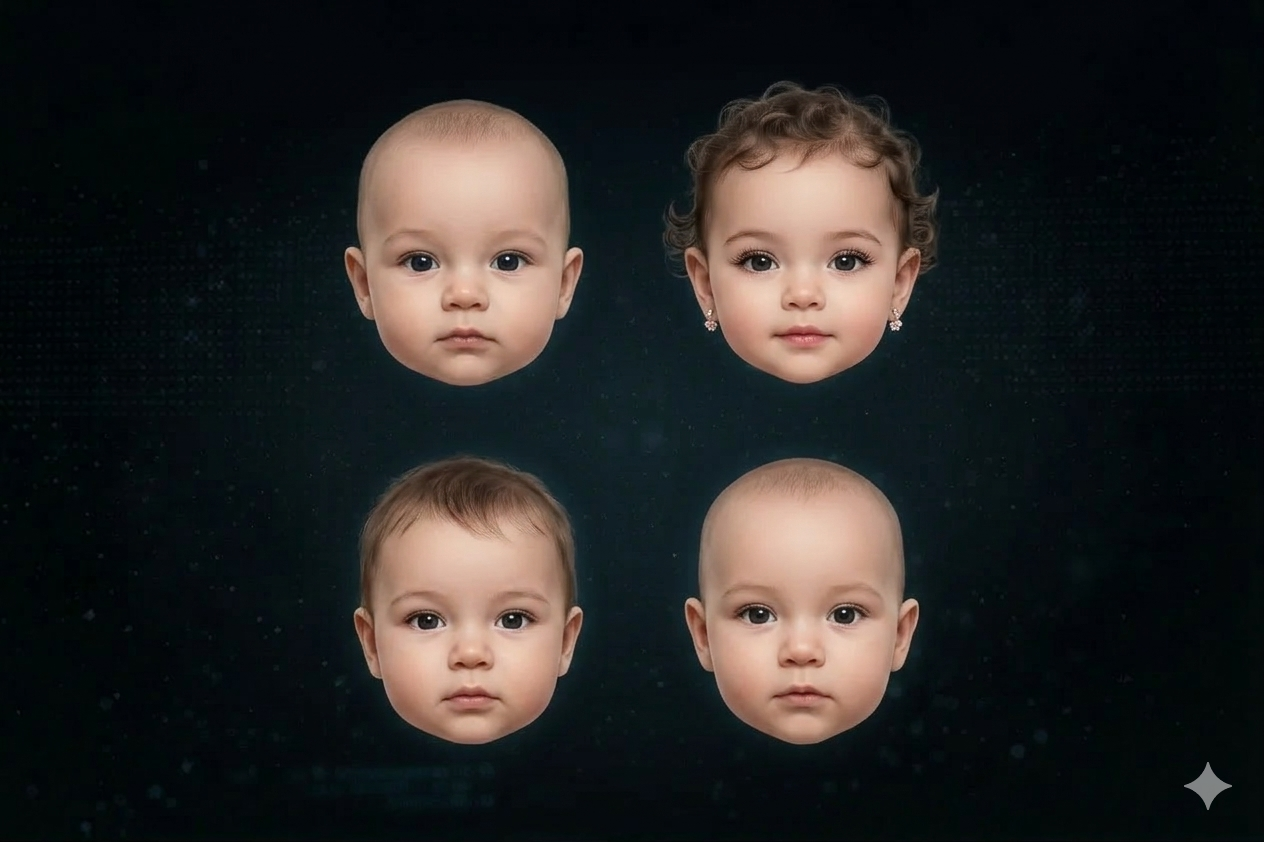
- Generative synthesis. A diffusion model renders a brand-new infant face from that combined descriptor, with correct child proportions — larger cranium relative to face, shorter chin, rounder cheeks, softer nasal cartilage. Nothing is copied and pasted from the parent photos.
That third stage is the reason results from 2026 tools look like photographs of real babies while 2015 tools looked like a double exposure.
Which features can be predicted — and which cannot
Honesty matters more than hype here. Some traits are highly predictable from two parents; others are effectively a coin flip.
| Trait | Predictability | Why |
|---|---|---|
| Skin tone range | High | Melanin levels are strongly additive between parents |
| Hair colour (dark vs light) | High | Eumelanin production follows clear dominance trends |
| Eye colour | Moderate | Mainly OCA2/HERC2, but at least 10 modifier genes exist |
| Nose shape | Moderate | Polygenic; cartilage keeps developing until adolescence |
| Face shape / jawline | Moderate | Highly heritable but not visible until childhood |
| Hair texture | Moderate | Newborn hair is frequently replaced within 12 months |
| Exact adult resemblance | Low | Recombination is random; siblings differ dramatically |
Two biological siblings share roughly 50% of their segregating DNA and can still look strikingly different. No generator can tell you which of the many possible children you will actually have — it shows you one statistically plausible outcome from a very wide distribution.
Why newborn eye colour is the biggest source of "wrong" predictions
Melanocytes in the iris stroma are barely active at birth. Many babies of European ancestry are born with slate-blue eyes that darken between six and twelve months, and pigment can keep deepening until age three. A generator showing a blue-eyed newborn for two brown-eyed parents is not necessarily wrong about the newborn — it is simply showing an early stage of a face that is still pigmenting.
This is why age matters. A prediction rendered at age 3, 6 or 10 is usually far more informative than a newborn render, because pigment and bone structure have both stabilised.
How to get the best result from a free generator
Input quality decides output quality more than the model does. In practice:
- Use flat, even lighting. Hard side light bakes false shadows into the descriptor and can shift the predicted nose and cheekbone shape.
- Face the camera. A three-quarter angle hides one side of the jaw, and the model has to infer it.
- No sunglasses, no heavy makeup, no filters. Beauty filters slim the jaw and enlarge the eyes; the child inherits those artificial edits.
- Keep hair off the forehead. The hairline and forehead width are genuinely heritable and genuinely useful signals.
- Use a recent photo. A twenty-year-old picture describes a face that has since changed.
- Avoid group shots. Cropping a face out of a wide shot leaves you with too few pixels for reliable encoding.
A neutral, well-lit selfie from each parent, taken indoors near a window, outperforms a professional portrait shot with dramatic lighting almost every time.
Free vs paid: what the difference actually buys
Nearly every tool advertising itself as free operates on a trial model, because generation costs real compute. The genuine differences are usually:
- Resolution. Free tiers commonly return a small, watermarked, or heavily compressed image.
- Age options. Rendering the same child at 3, 6, 10, 18 requires separate generations.
- Variation count. One render represents one draw from the distribution; several renders show you the realistic spread.
- Privacy handling. This is the one worth reading carefully — some services retain uploaded photos for model training.
Before you upload two faces anywhere, check whether the service deletes source photos, whether results are private by default, and whether you can delete your account and data on request.
Is any of it scientifically valid?
Partially, and the honest framing is "informed estimate, not diagnosis". Facial morphology is measurably heritable — twin studies put heritability of many craniofacial measurements above 0.6 — and large genome-wide studies have mapped dozens of loci that influence nose width, chin protrusion and brow ridge. A model trained on real parent-child image sets learns those correlations statistically.
What no consumer tool does is read your DNA. It reads your faces. That is a good proxy, because your face is an expression of your genotype, but it cannot resolve recessive alleles you carry and do not display. Treat the output as entertainment grounded in real inheritance patterns, not as a medical or genetic report.
Frequently asked questions
Can I use a generator with only one parent photo?
Some tools allow it, but the result becomes a de-aged version of that single face rather than a genuine prediction. Two parents is the minimum for a meaningful blend.
Does it work for mixed-heritage couples?
Yes, and this is where modern models improved most. Pigment inheritance in mixed couples is intermediate rather than binary, and current models render that intermediate range instead of snapping to one parent.
How accurate is it really?
Expect strong accuracy on skin tone and hair colour, decent accuracy on overall face geometry, and low accuracy on fine detail. If you compare a prediction against a child born later, the usual reaction is "recognisably in the family" rather than "identical".
Is it safe to upload photos?
Only to a service with a clear retention policy. Look for explicit statements about deletion, private results, and no third-party sharing.
The short version
A free future baby face generator is at its best when you treat it as a well-informed simulation. Feed it two clear, unfiltered, front-facing photos; expect skin tone, hair colour and overall facial geometry to land close; expect exact features to vary; and generate the child at an older age if you want the most realistic sense of resemblance. Used that way, it is one of the more genuinely fun applications of generative AI — and one of the few where the underlying science actually supports the output.
Frequently Asked Questions
How accurate are free future baby face generators?
Free future baby face generators provide an <em>informed estimate</em> based on inheritance patterns, but they are not 100% accurate predictions of your child's exact appearance. Modern tools use advanced AI to synthesize a plausible infant face from parent photos, but they cannot account for the random recombination of genes or predict every recessive trait you carry. Think of it as entertainment grounded in science, not a definitive genetic report.
What features can a baby generator predict reliably?
A baby generator can reliably predict ranges for <strong>skin tone</strong> and <strong>hair color</strong> (dark vs. light), as these traits show strong dominance patterns. <em>Eye color, nose shape, face shape, and hair texture</em> have moderate predictability, as they are influenced by multiple genes or develop over time. Features like exact adult resemblance are low in predictability due to the vast possibilities of genetic recombination.
Why do baby face generators need good quality photos?
Good quality photos are crucial because <strong>input quality directly impacts output quality</strong>. Clear, well-lit photos with a neutral expression allow the AI to accurately encode facial features like interocular distance, jaw angle, and pigment values. Poor lighting, filters, heavy makeup, or obscured features force the model to infer data, leading to less realistic and potentially inaccurate results in the generated baby face.
Can a baby generator predict eye color change after birth?
No, a baby generator cannot predict specific eye color changes after birth because infant eye color is often unstable. Many babies are born with slate-blue eyes that change color over the first year or two as melanocytes in the iris become more active. A prediction showing a blue-eyed newborn from brown-eyed parents might not be 'wrong' for the newborn stage, but it doesn't account for later pigment development. For a more stable prediction, consider generators that can render children at older ages.
How do modern AI baby generators work differently?
Modern AI baby generators differ significantly from older tools by using a three-stage process: facial encoding, trait weighting, and generative synthesis. Instead of just blending images, they first convert parent photos into detailed numeric descriptors. These descriptors are then combined, weighting dominant traits appropriately. Finally, a <strong>diffusion model synthesizes a brand-new infant face</strong> with correct child proportions, resulting in a realistic image rather than a ghost-like adult blend.
Is it safe to upload photos to a baby generator online?
Safety varies significantly between online baby generators. Before uploading photos, always <strong>check the service's privacy policy</strong> to understand how your data is handled. Ensure they delete source photos after use, that results are private by default, and that you have the option to delete your account and data upon request. Some services may retain uploaded photos for model training, which could be a privacy concern.
What is the difference between free and paid baby generators?
The main differences between free and paid baby generators often include <strong>resolution, age options, and variation count</strong>. Free tiers typically offer lower resolution, watermarked, or compressed images. Paid versions usually provide higher quality, the ability to generate the child at different ages (e.g., 3, 6, 10 years), and multiple 'what-if' variations to show a wider range of plausible outcomes. Privacy handling can also differ, with paid services often offering more robust data protection.
Can a baby generator tell me my child's exact genetic makeup?
No, a baby generator cannot tell you your child's exact genetic makeup. While it uses your facial features, which are an expression of your genotype, it <strong>does not read your DNA directly</strong>. It cannot resolve recessive alleles you carry but do not display. Think of the output as an informed estimate of a statistically plausible outcome, not a medical or genetic report, and enjoy the entertainment aspect of seeing a potential future face.